
Why Your Brain Sabotages Success and How to Rewire It for Confidence with Pat Schultz
Episode #45: Show Notes
Your brain is literally sabotaging your success—and it thinks it's protecting you.
In this eye-opening conversation, neuroscience coach and bestselling author Pat Schultz reveals the hidden battle happening inside your brain every time you try to step outside your comfort zone. If you've ever wondered why you avoid doing things you know you should do, or why fear seems to win even when there's no real danger, this episode will finally give you the answers.
Pat breaks down complex brain science into simple, actionable strategies that women over 40 can use right now to overcome limiting beliefs, build authentic confidence, and finally go after those dreams you've been putting off. From understanding your amygdala's fear response to harnessing the power of neuroplasticity, you'll discover why small steps are scientifically proven to create lasting transformation.
This isn't just motivational talk—it's backed by neuroscience. And the best part? Your brain can rewire itself at any age.
📖 Transcript for this episode (PDF)
Listen to the full episode:
Watch this episode’s video:
(we had tech issues, so this video is a summary of the key points, not the full interview)
Why Our Brains Work Against Us
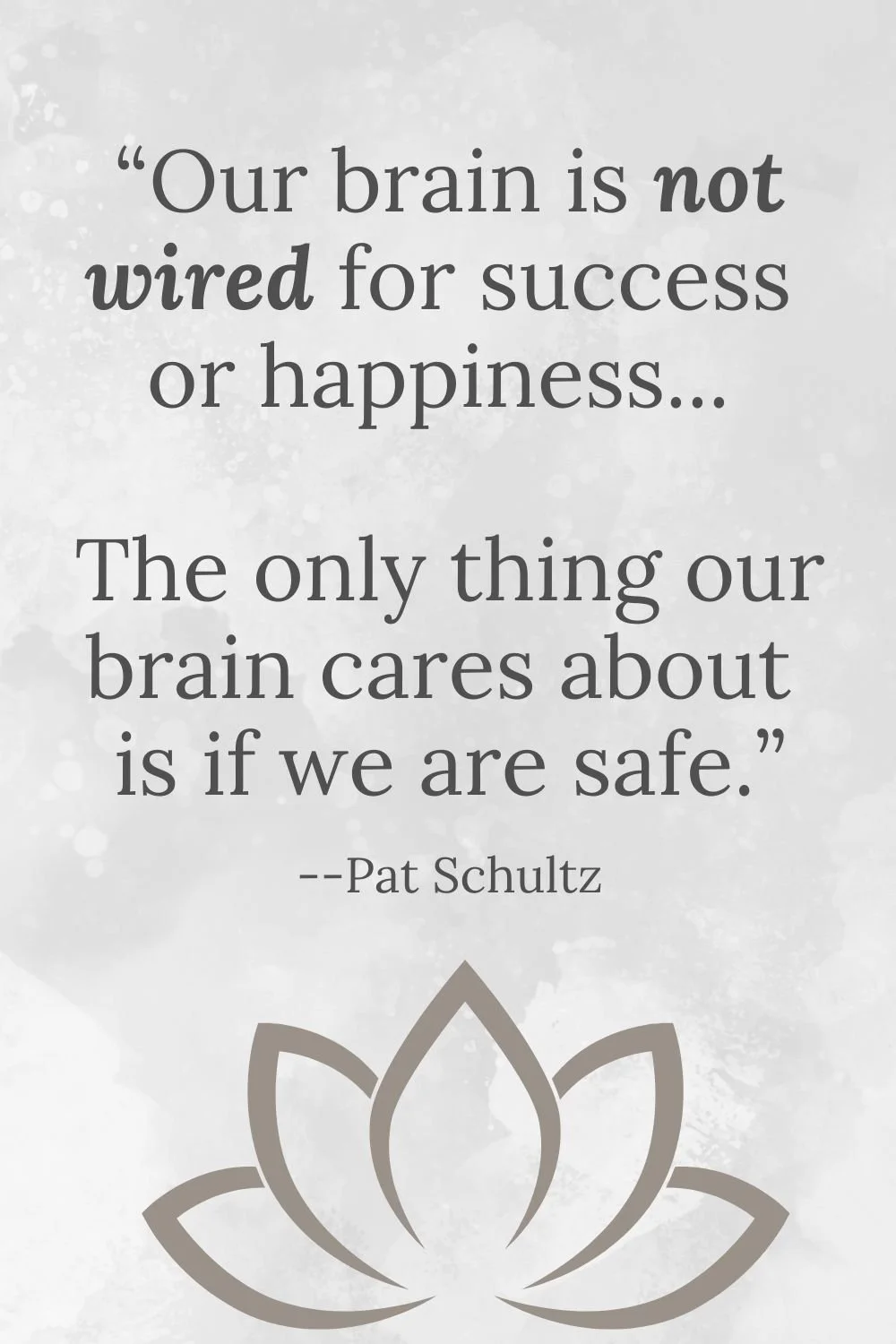
Pat shared something that I think is incredibly freeing once you really understand it: your brain is not wired for success or happiness. It’s wired for safety.
Your brain’s number one job is to keep you alive. It doesn’t care if you’re fulfilled, confident, or living your purpose. Safe, familiar, and predictable is what it prefers, even if that means you stay frustrated or stuck.
This explains why we often don’t do the very things we know would help us grow.
Pat explained that when we think about doing something unfamiliar or scary, our amygdala, the brain’s fear center, sounds the alarm. Danger, danger. And when we back away from that thing, the brain actually rewards us with dopamine. And we feel relief!
So without realizing it, we’re reinforcing the idea that avoidance equals safety.
The Fear Isn’t the Problem
It’s rarely the obstacle itself that keeps us stuck. It’s our fear response to the obstacle.
When fear shows up, we assume it means we shouldn’t proceed. But fear is often just a signal that something is unfamiliar, not unsafe.
Pat talked about how important it is to say to yourself, “I’m afraid, but there’s no real danger here.” No saber-toothed tiger. Just discomfort, uncertainty, or the possibility of embarrassment.
And when you do the thing anyway and realize you’re still alive, you begin teaching your brain a new story.
What If It Doesn’t Go Well?
We also talked about what happens if you do the scary thing and it doesn’t turn out the way you hoped. Pat shared that interpretation is everything.
If you try something, feel embarrassed, and tell yourself, “See, I knew I shouldn’t have done that,” you strengthen the old neural pathway.
But if you say, “Okay, that didn’t go perfectly, but I survived, and next time I’ll do it differently,” you begin building a new one.
Same experience. Completely different outcome in the brain.
Amygdala vs. Prefrontal Cortex
We also talked about two key parts of the brain, the amygdala and the prefrontal cortex. Pat explained that the amygdala reacts instantly. It’s fast, emotional, and designed for survival. The prefrontal cortex, where rational thinking, planning, and decision-making happen, is slower.
This is why simple practices like pausing, breathing, or even counting to ten before responding or reacting to something actually work. That pause gives the amygdala time to calm down and allows the prefrontal cortex to step in and say, “Hey, this isn’t actually dangerous.”
Pat shared that we don’t have control over the fear response firing, but we do have control over what happens next. When we pause instead of reacting, we interrupt the knee-jerk fear response and then we’re able to make a more empowered choice.
This is especially important when our modern fears involve things like rejection, visibility, or not doing something perfectly.

Neuroplasticity Is Your Superpower
Neuroplasticity Is Your Superpower. Pat shared that neuroplasticity simply means your brain’s ability to rewire itself by creating new neural pathways and weakening old ones.
That old saying, “You can’t teach an old dog new tricks,” is just not true. Your brain can learn, adapt, and reinvent itself your entire life. Which means it is never too late to try something new!
And here’s the key point Pat emphasized: trying new things is actually the most effective way to change those neural pathways in the brain. Every time you do something new, even something very small, you are literally teaching your brain, “I can do new things and I am safe.” That repeated experience is what rewires the brain.
Small Steps and Trying New Things Create Big Change
Pat emphasized that transformation doesn’t require giant leaps. Small steps are actually more powerful from a neuroscience perspective because they don’t overwhelm the fear response. When you take one small step and survive it, your brain updates its data and says, “Ahh. Ok. This is safe.”
Pat shared an example of a client who was terrified of networking. Instead of forcing herself to attend big events, she started visiting smaller gatherings with the goal to speak to just one person. By doing that, she began to see herself differently. Not as someone who can’t network, but as someone who can network!
The Power of Writing Things Down
We also talked about journaling, which you know I love.
Pat shared that writing things down strengthens neural pathways because it engages thought, language, and emotion all at once. When you write about what you did, the new thing you tried, what worked, and how you survived, you reinforce the new story your brain is learning.
The Reticular Activating System
One of my favorite brain concepts we discussed is the reticular activating system, or RAS.
Tons of data comes into our body every microsecond through all of our senses. And if our brain was trying to process all of that and make us aware of it, you know, you're sitting on the chair, you're hearing the heater blowing, you're feeling the heat of the sunlight through the window…
There’s just too much data and your RAS kind of dulls what it thinks YOU don’t think is important, so you’re not overwhelmed. It only shows us what it thinks WE think is important.
Pat described the RAS as your brain’s GPS. She shared that opportunities don’t show up because we’re lucky. They show up because we have clarity about exactly what we want.
When you get clear about what you want, your RAS starts filtering the people, opportunities, and ideas that can help you get there, and these seem to jump out at you.
If you don’t tell your brain where you want to go, it can’t guide you there.
Pat’s Turning Point
Pat learned that her mother had a dream of retiring in the Caribbean, but she passed away and never got to do that. That became a wake-up call for Pat to keep moving toward her mission to help women over 40, realize that it's never too late to go after your dreams.
Pat attended a transformational speaker summit when she was 67 years old– but she ALMOST didn’t go. She worried about the cost, the travel, her age, her appearance, and other limiting beliefs. But she went anyway.
At that event, she met a mentor who helped her take the next steps. Since then, she’s become an Amazon bestselling author, spoken on larger stages, and is now working on her second book. And all of it traced back to that one decision.
My Mom’s Unfinished Dream
My mom wrote in her journals that she wanted to be an art therapist. She was an artist, and this dream showed up again and again over decades. We even looked into programs when she was in her late fifties. But she got stuck in the belief that she was too old and that the program would take too long. She never did it.
After she passed, that stayed with me. And it was one of the reasons this podcast exists today, because THIS was one of my dreams. I didn’t want to reach the end of my life knowing I never tried.
It’s Not Too Late
Pat shared that for many women over 40, what holds us back isn’t a lack of ability. It’s decades of ingrained beliefs about who we’re supposed to be. But those beliefs are not fixed.
Neuroplasticity is real. We can change our programming. And sometimes all it takes is one small decision to do something anyway.
Final Thought
If there’s one thing I hope you take away from today, it’s this: Fear doesn’t mean stop. It usually means something new is trying to emerge. Your brain can learn. Your confidence can grow. And it is never too late to begin.
Try a small “something new” today and start teaching your brain that it’s safe to do new things!
Meet Our Guest: Pat Schultz
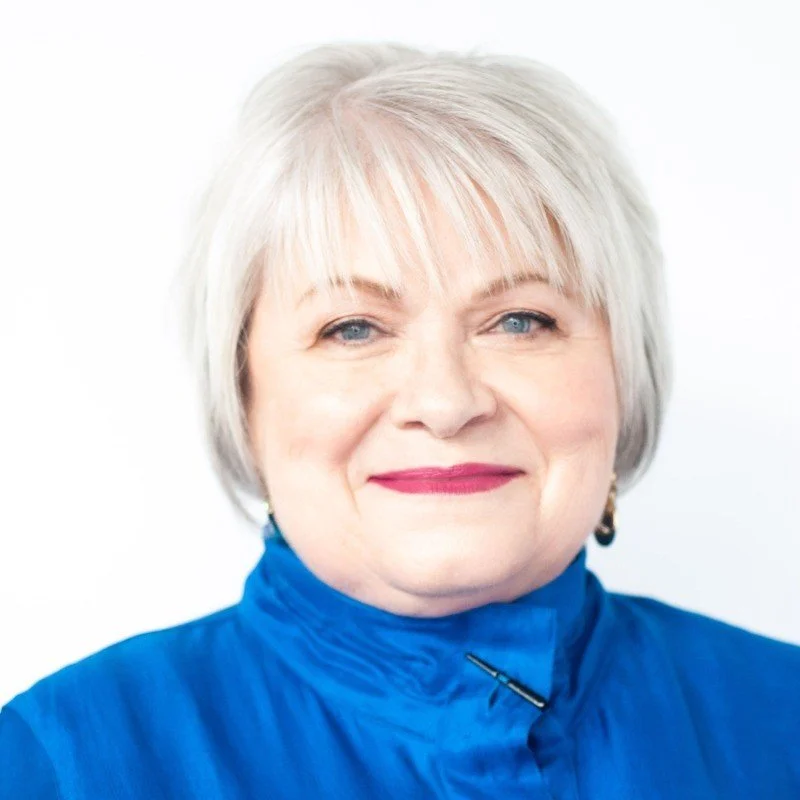
Pat Schultz is the founder of Ready4Takeoff and author of Her Unseen Battle. Her work combines neuroscience and coaching to help women (especially those over 40) break through fear, rewire limiting beliefs, and build authentic confidence. She specializes in making the brain science behind transformation simple and actionable—so people don’t just understand change, they experience it.
Connect with Pat:

Meet Our Host: Jennifer Robin O’Keefe
Jennifer Robin is always searching for the next thing that might help: the book, the practice, the reframe you didn't know existed but turns out to be exactly what you needed.
Through conversations with experts, authors, and everyday humans, along with personal reflection, Jennifer focuses on bridging the gap between "woo" and practical, accessible self-support. Her work is rooted in the belief that wellness is not about fixing yourself, but about remembering your worth and finding what genuinely works for you.
She has spent decades exploring personal growth, energy healing, and mind-body wellness. She's trained in EFT Tapping and coaching, tools she often references in her conversations. She's not positioning herself as an expert who has it all figured out. She approaches her work with humility, curiosity, and deep respect for individual experience.
Jennifer is a lifelong learner who cherishes books and notebooks. She loves diving into research and sharing what she learns in a way that feels relatable, compassionate, and pressure-free. These conversations are an invitation: to ask your own questions, gather perspectives that resonate, and build a life that actually feels good to you.