Worms, Sprouts, and Laughter for Your Health with Cathy Nesbitt
Episode #43: Show Notes
Cathy Nesbitt, a multi-award-winning environmental innovator and health advocate joined me to talk about three fascinating topics:
worm composting
growing your own sprouts
intentional laughter
Together, these form a powerful approach to sustainable living and personal wellness.
📖 Transcript for this episode (PDF)
Listen to the full episode:
Watch this episode’s video:
When the Garbage Crisis Became Personal
Cathy's journey into the world of worm composting started in 2002 when her landfill in Canada closed. Despite Canada being the second largest country in the world, they couldn't find a place to site a new landfill. The solution? Exporting garbage to Michigan. As Cathy puts it, it was ridiculous and irresponsible, but it sparked an idea that would change her life.
The real beginning, though, happened even earlier, in 1993. That's when a friend asked Cathy to look after her worms for the summer. Cathy was an avid gardener and composter, but she didn't really want worms in her house. I can honestly say I've never been asked to watch someone's worms, so I had to ask how many she was responsible for that first time. It turns out it was a whole container, probably at least a pound of worms. These weren't the big nightcrawlers you use for fishing, but cute little red wiggler worms, composting worms. We're talking about maybe a thousand worms.
Unintentional Fruit Fly Farmer
Here's where things get interesting. Cathy's first experience with worm composting was, in her words, horrible. She accidentally became a fruit fly farmer because she wasn't managing her worm bin properly.
Here's the science behind it. When we bring fruit home from the grocery store, fruit fly eggs are already on the outside of the peels. We wash apples and pears before eating them, but we don't wash bananas. We just peel them without washing, so the eggs are still intact. When we put that banana peel in the worm bin, it creates the perfect environment for those eggs to hatch. It's nice and warm and moist, exactly what fruit fly eggs need.
The solution is simple: rinse your scraps. Fruit flies are not a necessary component of worm composting, especially indoors.
Why Composting Matters
I wanted to understand the major benefits of composting and why we should even do this in the first place. Cathy's answer was straightforward: because we all eat. We're all creating food scraps, and compost is something we can use in our gardens as natural fertilizer.
It's nature's way of converting what we call garbage. And that's an important distinction. When we call it garbage, it is garbage. But if we call it food for something else or a resource, it becomes something valuable. Composting is a wonderful, sustainable way for us to manage our scraps and turn them into fertilizer so we can grow more nutrient-rich food naturally, without chemicals.
Cathy pointed out something I hadn't really thought about before. In North America, we've really destroyed our soil growing corn, wheat, and soy. Those crops are fine, but not on their own. That's not how nature intended things to work. So we need a lot of chemicals to fight off the bugs that nature normally looks after on its own.
The main answer to why we should compost is so we can be more responsible. We can feel good about our choices. We're slowing down when we're composting and growing our own food. And we don't waste that food because we took the time to grow it.
Getting Started with Indoor Worm Composting
At my house, we compost outside. Things like banana peels usually end up as chicken feed since we have chickens. A lot of veggie scraps are safe for the chickens too, and as Cathy pointed out, chickens are the original composters. They're so great at helping with the garden.
But what about people who don't have chickens or outdoor space? I asked Cathy about baby steps someone could take if they're not currently composting but are curious. Her solution is perfect for urban settings or anywhere you want to avoid attracting wildlife to your yard.
Indoor worm composting works in any setting. Composting outdoors may attract rats, rodents, raccoons, or skunks. Or if you live in a more rural area, you could attract coyotes, wolves, or bears. Indoor composting solves this problem and keeps your yard free from animals looking for a free buffet.
The setup is surprisingly simple. Any container will do. A plastic tote works great for do-it-yourselfers. There are also systems available if people don't want to handle the worms directly. You just need carbon and nitrogen, the same as outdoor composting.
The carbon component includes shredded paper, leaves, straw, cardboard, a little bit of soil, eggshells, and water. That's your bedding. The nitrogen is your food scraps from the kitchen: banana peels, all your fruit peels, coffee grounds, and tea bags. What stays out? No meat, no dairy, and no sauce.
How Much Do Worms Eat?
I had to ask about capacity because I follow a vegetarian diet, and we eat a lot of vegetables at my house. We do a fruit and veggie smoothie every morning. I was thinking that a little bin would fill up pretty quickly with all our scraps. So what does this look like for a typical family? How long does it take to fill, and how long does it take for the worms to break everything down?
Cathy explained the basic math: worms eat about half their weight per day in food scraps. If you want to manage all of your organic matter, weigh your scraps for a week or two. Put them in a container and weigh them so you know exactly how much you're creating per week.
Let's say you have a pound of worms. They'll eat half a pound of food waste per day, which comes out to three to four pounds per week. If you create a lot of scraps and you have other options like chickens or outdoor composting, you can use both methods.
The beautiful part about worm compost is that it's more processed by nature. Compost is great, but worm compost is greater because the worms have added their own special contribution. They've taken out any bad stuff, which gets held in their bodies. They really are miraculous creatures that have been waiting millions of years to help us with our garbage crisis and our food crisis.
Managing a Worm Population
This might sound like a silly question, but I had to ask: do the worms just keep reproducing, and how do you manage the total numbers? I was wondering if they would exponentially multiply and suddenly you'd have way too many.
Cathy's answer was both reassuring and fascinating. Yes, they breed more than rabbits. But here's the thing: it's impossible to be overrun with worms.
The worms will regulate their own population based on available space and available food. You would never be overrun with worms. The adults actually start dying off to make room for the babies. At a certain point you might have a lot where you think, "Oh my gosh, we have so many worms." If that happens and you want to manage more of your scraps, you can take some of those worms, set up another bin, and you've doubled your system. The worms will keep reproducing in the first bin and they'll get settled and reproduce in the second bin as well. You can keep expanding your system as desired.

Where to Keep Your Worm Bin
Location is important for successful worm composting. Temperature is key, so indoors is usually best. In Canada it's too cold in the winter, and in places like Texas or Florida, it may be too hot in the summer. Indoors is perfect because if we're comfortable, the worms are comfortable.
The kitchen is actually ideal because you see the bin and remember to feed them. You can keep the bin in the basement or in the garage if it's temperature controlled during spring, summer, and fall. In the winter, or if it's really hot in the summer, it would need to be brought inside.
I asked about vacations because, as Cathy mentioned, her friend originally asked her to watch her worms for the summer. What if you're going to be traveling for a week and there won't be any food scraps for the worms?
Turns out, the worms are very resilient. They're eating the bedding and the food. She wouldn't recommend loading up your bin before you leave because this is an aerobic process, meaning with oxygen.
For up to three weeks, your worms will be fine. If you're going longer than three weeks, get a worm sitter, just like you'd have someone come in and water your plants. They can just toss some apple cores in there or something.
Here's a great tip for avoiding fruit flies: bury the food in the bedding. Even if you have fruit flies in your house, they're not going to make their way into your bin if the food is buried.
Discovering the Power of Sprouts
Cathy is also very active in sprouting. She founded Cathy's Sprouters, and I was excited to learn about this part of her work. In 2002, at her very first event exhibiting, she met Tony Hornick. He had a sprouting business, and his sprouter looks like a spaceship. It's the size of a dinner plate, made of food grade plastic with a stainless steel mesh strainer. It looks like a little microclimate, kind of like a little greenhouse thing.
Cathy didn't sprout or grow sprouts at the time. She knew nothing about why she would eat sprouts or what to do with them. During a break in the audience, she asked this gentleman, "What is that thing and why are people buying that and not my worms?" It was a garden event, after all.
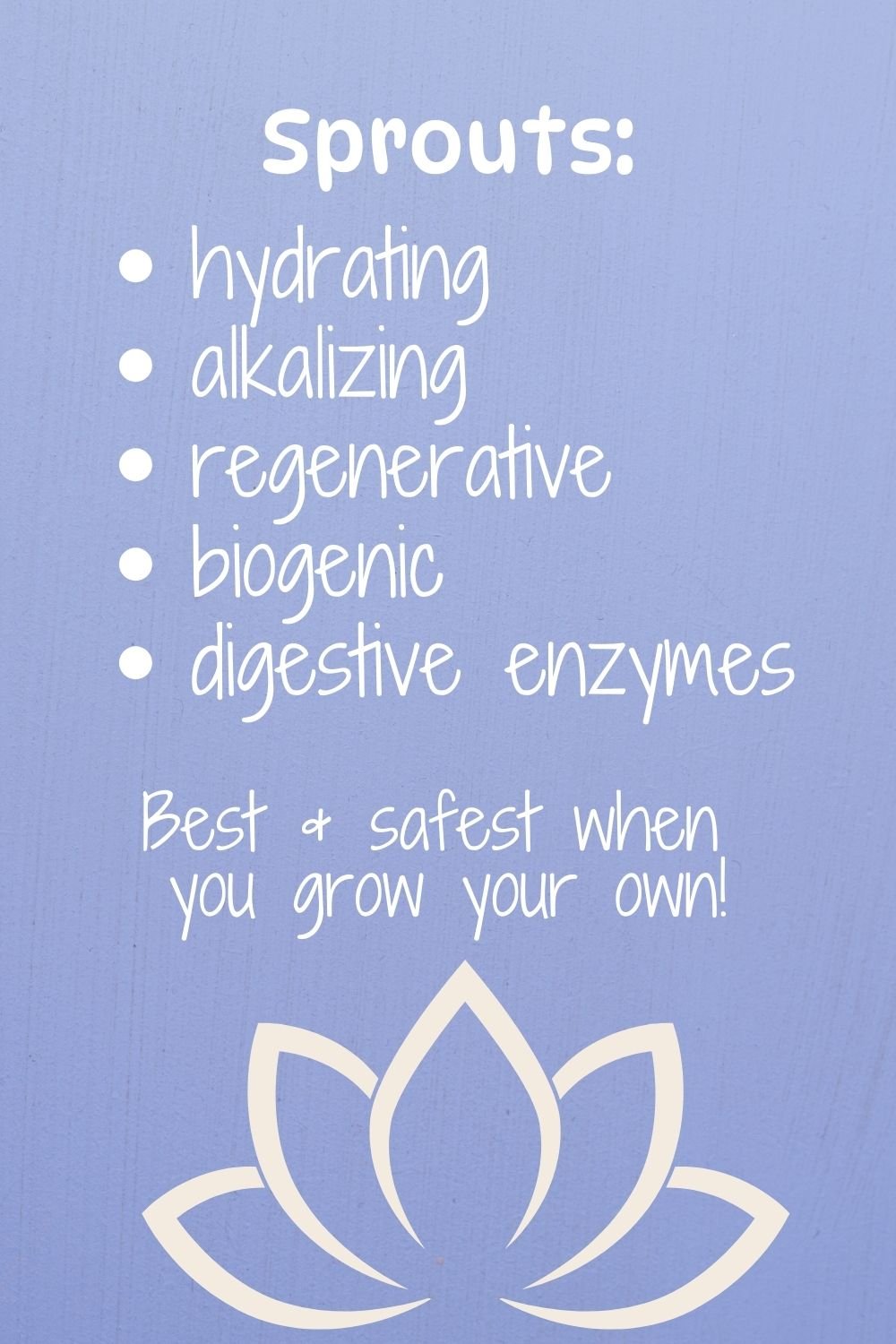
Tony told Cathy all about sprouts and all their beautiful benefits. Sprouts are hydrating, alkalizing, regenerative, biogenic, and contain up to a hundred times more digestive enzymes than raw vegetables. Cathy's response was perfect: "Oh my gosh. I don't need to know why something works. You look super healthy. You're 72, right? I'll do what you do. I'll do the same thing."
Starting a Daily Sprout Practice
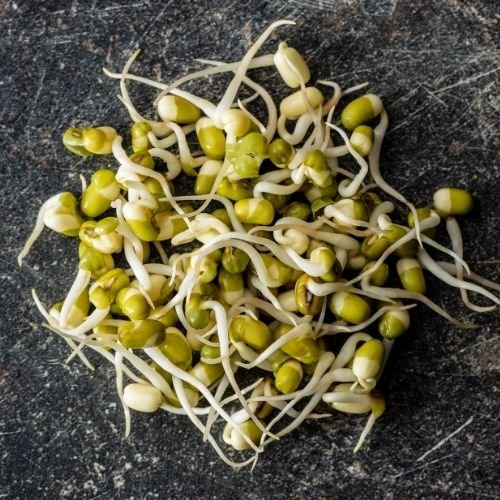
Tony gave Cathy specific instructions: "If you're going to do sprouting, start your day with two tablespoons." The sprouts he recommended were mung beans, which are the bean sprouts you see in Chinese food. The white long beans, except you grow them as sprouts. When the seed or the bean root is the size of the seed or the bean, that's when they're most nutritious and when you eat them.
He explained that starting your day with two tablespoons of mung beans provides enzymes that prepare your body for the rest of the food you're going to take in during the day. They're kind of like amino acids or whatever helps things go where they need to go in your body.
For 10 years, this was Cathy's private health plan and she started every day with sprouts. She's high energy and feels great. She's 63 now and is super healthy. She feels like she keeps getting more and more healthy as she goes along with all her practices. She doesn't take any prescription drugs. She doesn't even take a multivitamin. She grows her nutrition on the counter for pennies a day.
Turning Sprouts into a Business
In 2012, Cathy saw Tony at another event. He was 82 by then. Coming from an employee background, she was astonished that somebody was still working and loving what they were doing. It was beautiful. He said to her, "Why don't you sell the sprout system with your worm composting business?"
She thought it was a great idea. After all, she'd been eating these sprouts for 10 years and loved them. This should be easy, right? Wrong. There was an article on the front page of the Toronto Star, the largest paper in Canada, and it said, "Sprouts are toxic." What they were actually talking about were the bags of bean sprouts that come from China. If they grow them overnight or in a day or two, what did they put on them? Of course they might be toxic by the time they reach you.
Even if you buy sprouts that are sprouted at the grocery store, like microgreens, alfalfa sprouts, or broccoli sprouts, you need to ask questions. How long have they been sitting on the shelf? Who grew them? How did they grow them? Sometimes when you get them home, they smell funky already, and that's the bad bacteria. You throw them away because we're sprouting for our health, and we can sprout for pennies a day. It's so affordable to grow nutrient-rich sprouts at home.
The Practical Side of Growing Sprouts
I had some practical questions about sprouting. What's the timeline like? How many do you have to plant to ensure that you have enough each day?
There are all kinds of systems for sprouting. You can grow in jars in various ways. Tony's system is really simple in that it's just a mesh, so there's nowhere for mold to grow as long as you're rinsing the right amount of times because the sprouts are not sitting in water.
Here's the basic ratio: you start with three tablespoons of seeds and that converts to two cups of food. Three tablespoons creates two cups. If you're eating two tablespoons a day, that would be enough for the week if you're one person. But Cathy suggests starting your beans, growing them, keeping them in the fridge, and starting your day with those. Then you start another batch right away so you've always got them.
You can sprout every kind of seed. Any kind of vegetable that grows starts as a sprout, and then it becomes a microgreen. Almost all can be eaten raw, though you'd need to do your research if you have any allergies. The only one Cathy's aware of that you cannot eat raw is kidney beans. You can sprout them and then cook them, but they're not meant to be eaten raw.
Eating The Whole Sprout
I had what might seem like a silly question, but as a non-sprout eater, I needed to know: when you have your mung beans and they've sprouted and they're ready to eat, are you eating the bean part also, or just the green part?
You're eating the whole thing. The bean and the sprout. Yes, it's still one piece. The little seed with the little root coming out. It's ready. You pop it in. And the mung beans are really neutral in flavor. You can add them into yogurt, cereal or oatmeal, or just eat them as they are, and they make a wonderful snack. They're a fiber-filled, nutrient-rich food!
The Secret to Avoiding Vitamins
Cathy made a comment that she doesn't take any vitamins. I'm pretty sure anybody listening to this podcast spends a crazy amount of money on vitamins and supplements each month. My husband and I have a whole cabinet, like his and hers, of what we take every day. So I had to ask how sprouts could be her only health plan.
Sprouts are nature's superfood. They've got fiber, protein, minerals, and vitamins. Everything that our body needs is in that little sprout. And then as it starts to grow, it loses enzymes and nutrients because it wants to look like its parent. The broccoli plant doesn't need the carrot component or those other pieces, so those fall away (not literally, but as it's growing). It's really quite remarkable how these sprouts are just incredible.
Cathy says you can eat as much as you want, but you really can't because they're full of fiber. You really do get full, unlike if you're eating junk food. You might eat a whole bag of chips and still be hungry but feel sick too. With sprouts, especially with the fiber and protein combo, you're definitely going to fill up.
How Laughter Fits into Wellness
In 2012, something shifted for Cathy. She'd been selling worms by the pound for indoor composting and had heard "Ew, worms in the house" hundreds of times. She wasn't paying attention at first. She was focused on telling people, "No, no, no. This is important. You need this."
But people don't buy what they need. They buy what they want. And they definitely didn't want what she was offering. People wanted to be responsible. They wanted to look after the planet. People were cheering her on, saying "Yay. Good for you. This is so great." But when she'd ask, "Do you have worms in the house?" they'd say no. There was a line they wouldn't cross.
That day in 2012, she heard it. She felt it. She questioned everything. She was thinking, "Oh my gosh, universe, I don't know what to do. Ten years I've been going at this. I believe so much in this and I don't know what to do." The very next day, she was introduced to laughter yoga.
Laughter yoga is not doing yoga and laughing or about jokes or comedy. It's laughing as a cardiovascular exercise.This is intentional laughter, laughing for the health of it.
We've all heard the expression "laughter's the best medicine," but Cathy's next question is: have you had your daily dose? She's talking about dopamine, oxytocin, serotonin, and endorphins. The love drugs and happy hormones.
Understanding the Science Behind Laughter Yoga
When we laugh full on, we're fully present, we feel great, and we connect on a deeper level. When you get into those giggle fits, you can't even remember why you're laughing. All you can remember is, "Wow, I felt great after we were together."
Laughter yoga was started in 1995 by a medical doctor in India. His goal is world peace. After Cathy was introduced to it, she thought it was pretty neat. That same week in 2012, she was at a networking event with hundreds of people. The very first woman she met was a laughter yoga teacher. Cahthy attended a local laughter club for three months, but then it closed.
That's when Cathy decided to get trained as a leader. She loved it so much that she got trained as a teacher, so now she teaches leaders as well.
The Laughter Chemicals
The training teaches what the expression "laughter is the best medicine" really means, and the scientifically proven benefits to the body.
It's actually changing or causing chemicals to be released into our body. The feel-good chemicals versus the stress chemicals like cortisol, adrenaline, and epinephrine. When we're stressed, blood and oxygen leave our frontal lobe so that we can escape or whatever, even if it's just in our mind.
When we're laughing, we're exhaling. "Ha ha, ha." We don't have to think, "Oh, breathe in, breathe out." We have to breathe in to continue making the "ha ha" sound. "Ha ha, ha, ha, ha, ha, ha ha." And then we're secreting all those love drugs.
The brain requires 25 percent more oxygen than the rest of our body as an operating principle. So when we're stressed, we can't even come up with solutions. Have you ever lost your keys and you had to go somewhere? You're flapping around saying, "Where are my keys?" and you're getting more stressed because you're going to be late or whatever's happening.
Here's a tip from Cathy: next time you're flapping around searching for whatever you've misplaced, stop. Take a nice deep breath in. Laugh it off. "Ha ha ha ha ha." So you can start secreting the feel-good hormones. Then just wait. Ask, "Where did I leave my keys? Where did I leave my glasses?" And you'll find them. Your brain is literally being deprived of oxygen when you're in stress.
A Quick Language Tip
I want to jump in for a second and talk about the phrase "I lost my keys," because it's such a common thing people say, and with a simple tweak of language, we can make that more empowering. One of my mentors, Jack Canfield, suggests using the word "misplaced" instead of "lost." Because the word "lost" makes it seem like this is a permanent condition and there's no hope, while "misplaced" suggests that it's a temporary situation and could be resolved.
So saying "I misplaced my keys" is an improvement, but I think we can do even better. Abraham Hicks talks about intentionally using wording that keeps us in the energy of expectant discovery. For example, "My keys will show up right when I need them," or "My keys are coming back into my awareness."
But there's even one more wording tweak we can do to make it empowering as well as positive. Here's my suggestion: say, "My keys are right where I left them, and they're making themselves known." This simple language shift keeps us in alignment with a more positive, higher vibration. It's less about loss and more about allowing. Catch yourself when you say, "I lost my keys" and say, "Stop, rewind. My keys are right where I left them, and they're making themselves known."
Living in Joy Instead of Stress
Cathy makes an important point about how we're living in this perpetual state of stress now. If we work full time, we may dip into joy on Saturday, and think "I can relax today." And then it's like, "Oh crap, it's Sunday again."
But what if we could live in joy? Cathy believes it's our birthright. What Cathy's saying about laughing also makes me think about something I've read before about smiling. Even if you don't feel like it, if you just make the face, the muscles signal the brain. I read somewhere that you're supposed to smile as you're falling asleep because it secretes those same feel-good chemicals.
Cathy agrees completely. She suggests falling asleep smiling, and when you wake up, smile first thing rather than going through your to-do list. Smile and just have a moment of gratitude. Just be like, "Oh yes, I'm alive, I'm awake. I have a bed." Whatever it is.
The Body Doesn't Know You’re Faking
Laughter is such a wonderful expression and it changes everything. Here's something fascinating: our body doesn't know the difference between real and simulated laughter. Even if we don't feel like laughing, we can laugh. "Ha ha ha ha ha." And we start secreting those love drugs.
When people come to a laughter club for the first time, it's weird because there's no jokes and no comedy. We're like, "Laugh, okay?" And our bodies start secreting the love drugs and we start feeling great. Our body's having a party even though our mind might be saying, "What is happening here? Why are you laughing? You look ridiculous. Stop laughing."
Cathy's Free Online Laughter Club
Cathy offers her laughter club events both in person and online. Her online club is free every Tuesday at 9:30 am EST. It's 30 minutes of super fun self-care. She incorporates other energy modalities like: EFT tapping, qigong and brain gym. Laughter is complimentary magic medicine. There are no side effects except for the pains in your cheeks and your belly, but those are just the laughter muscles. It goes with everything. Sign up here
Now, five and a half years in, she has a beautiful following between 20 and 30 little Zoom squares. Her wheelhouse is special needs and seniors. Four or five of those squares are groups, including community living, different special needs groups, and long-term care.
We covered a lot and hopefully we've shared some tips that will help you on your journey to more sustainable living and better health. Until next time, remember that small changes can make a big difference, whether it's composting with worms, growing sprouts on your counter, or taking a few minutes to laugh every day.

Meet Our Guest: Cathy Nesbitt
Cathy is a Health and Wellness Advocate and founder of Cathy’s Crawly Composters, Cathy’s Sprouters and Cathy’s Laughter Club. She is a multi award-winning environmental innovator who uses workshops and inspirational speaking to motivate people to live a more sustainable life. Cathy is also an avid cyclist and gardener.
Connect with Cathy:
Free weekly laughter club & more info about Cathy

Meet Our Host: Jennifer Robin O’Keefe
Jennifer Robin is always searching for the next thing that might help: the book, the practice, the reframe you didn't know existed but turns out to be exactly what you needed.
Through conversations with experts, authors, and everyday humans, along with personal reflection, Jennifer focuses on bridging the gap between "woo" and practical, accessible self-support. Her work is rooted in the belief that wellness is not about fixing yourself, but about remembering your worth and finding what genuinely works for you.
She has spent decades exploring personal growth, energy healing, and mind-body wellness. She's trained in EFT Tapping and coaching, tools she often references in her conversations. She's not positioning herself as an expert who has it all figured out. She approaches her work with humility, curiosity, and deep respect for individual experience.
Jennifer is a lifelong learner who cherishes books and notebooks. She loves diving into research and sharing what she learns in a way that feels relatable, compassionate, and pressure-free. These conversations are an invitation: to ask your own questions, gather perspectives that resonate, and build a life that actually feels good to you.