
Breaking the Protein Myth: Plant-Based Nutrition for Every Body with Deborah Gertner
Episode #54: Show Notes
When Deborah Gertner joined me on the show, we dove deep into plant-based nutrition, athletic performance, and the myths that keep people from embracing a healthier lifestyle.
Deborah is a registered dietitian nutritionist and USA Triathlon Level 1 certified coach who helps athletes and everyday people build stronger, healthier bodies.
What started as a personal health journey for Deborah has turned into a mission to help athletes and everyday people build stronger, healthier bodies through intentional food choices.
📖 Transcript for this episode (PDF)
Listen to the full episode:
Watch this episode’s video:
XOX From Health Struggles to Plant-Based Advocacy
Long before becoming an athlete, Deborah struggled with GI health and the frustration of not being taken seriously by doctors. Once she finally connected what she was eating with how she felt, she realized there was a gap in both education and advocacy. This realization set her on the path to becoming a dietitian.
During her training, Deborah met a plant-based registered dietitian who introduced her to research showing links between plant-based diets and preventing or even reversing chronic conditions like heart disease, diabetes, and cancer, conditions that run rampant in her family.
At 27, while already improving her diet and becoming a runner, Deborah was diagnosed with thyroid cancer. Rather than derailing her, this diagnosis solidified her resolve to learn everything she could about how we take care of our bodies and advocate for ourselves, even in the face of serious health challenges.
Making the Transition to Plant-Based Eating
Deborah's transition to plant-based eating wasn't as dramatic as you might think. Right out of college, financial constraints pushed her toward vegetarian cooking. Rice and beans were cheap, tasty, and fit the budget. She had already gone dairy-free at 19 due to severe lactose intolerance, so she was already living a vegan-adjacent lifestyle.
Sixteen years ago, she made the conscious choice to dive in with both feet and fully embrace plant-based eating. Because she was already doing so much of it, the transition felt natural rather than restrictive.
The Truth About Lactose Intolerance and Dairy
Here's something that might surprise you: upwards of 70% of the adult population globally has some degree of lactose intolerance. We are the only animal that willingly seeks out the milk of other animals.
Milk is designed to nourish baby mammals. Human milk nourishes baby humans, and cow's milk nourishes baby cows. It's actually rare that humans have adapted over time to process lactose beyond toddlerhood. After age two or three, our ability to produce lactase (the enzyme that digests lactose) goes down significantly.
While continuously eating dairy can help you adapt to producing more lactase enzyme, Deborah points out that we've normalized feeling not so great after eating certain foods. Many people say, "Yeah, I'm super lactose intolerant, but I still eat dairy because I don't want to give up my ice cream or cheese."
Why Cheese Is So Hard to Give Up
There's a scientific reason why cheese feels addictive. Dairy products, especially cheese, are really high in a compound called casomorphines. Yes, it's exactly what it sounds like. It has a drug-like response in your body. So when people say they're addicted to cheese, they might actually be craving that feeling their body has when consuming it.
Our brains are also evolutionarily designed to love the creamy, salty, fatty textures because historically, that's the food that kept us alive.
The Most Common Nutritional Deficiencies in America
Every few years, researchers conduct in-depth examinations of the average American through the NHANES study. They measure everything from height and weight to what people are eating and build statistical models to identify deficiencies.
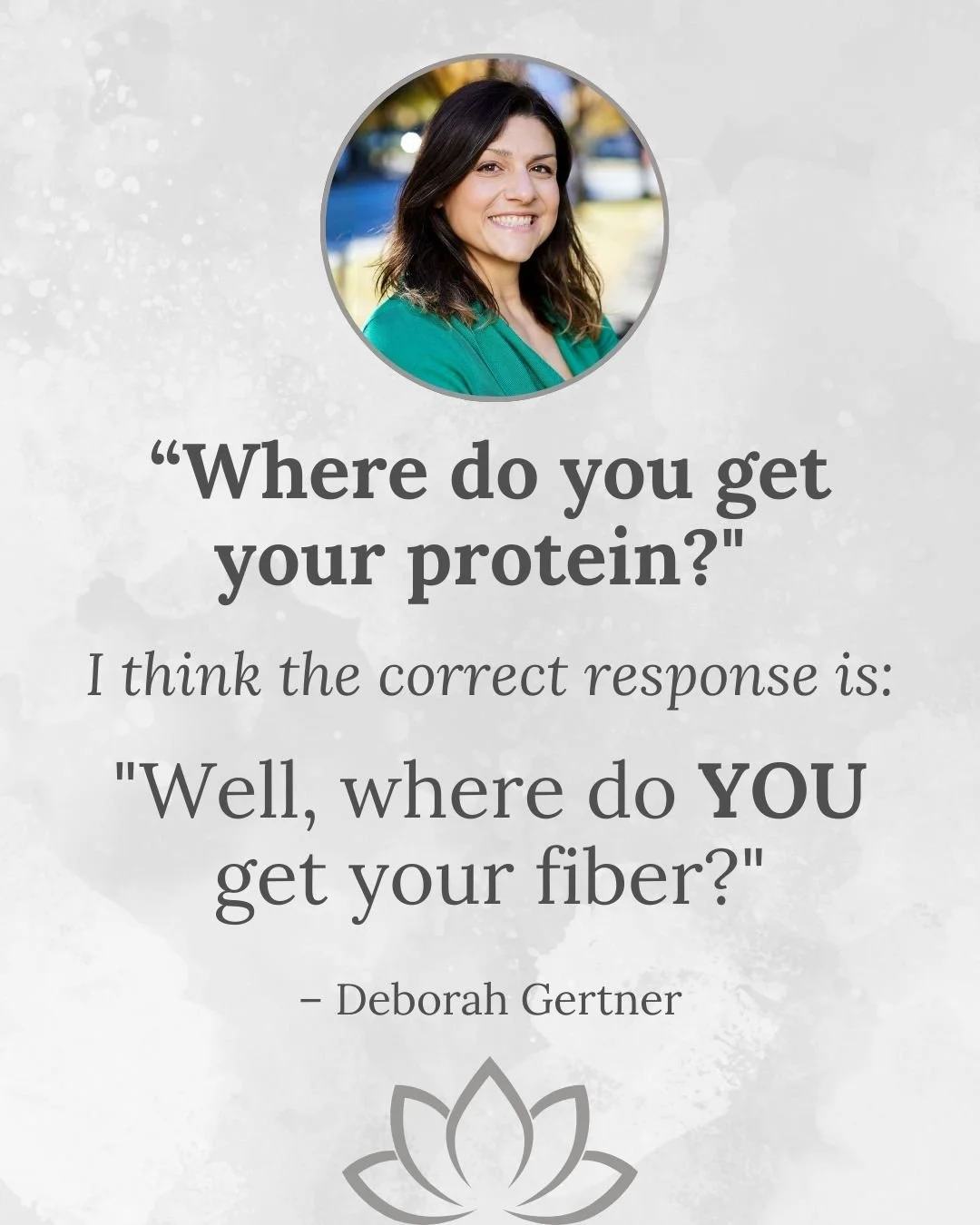
The last NHANES study showed that upwards of 92 to 97% of Americans are fiber deficient. Deborah makes a brilliant point: vegetarians are always asked "where do you get your protein?" but the real question should be "where do you get your fiber?"
Americans suffer from chronic diseases and cancers of the GI system, especially colon cancer. One of the best ways to prevent colon cancer, diverticulitis, or chronic constipation is to increase fiber intake. And here's the key: you only get fiber from plants.
Real Food vs. Fiber Supplements
While supplements like Metamucil and psyllium husk can be helpful tools, Deborah prefers that people get their nutrition from real food whenever possible. She thinks of supplements as tools in a toolbox. Everyone has a hammer and screwdriver, but you don't always need every tool.
In a perfect world, she recommends switching from refined grains to whole grains (white bread to wheat bread, sugary cereal to oatmeal), adding more fruits and vegetables, and even incorporating meat replacements that provide both protein and fiber.
There are important considerations with fiber supplements. You need to focus heavily on hydration when taking them, and they can bind to medications, preventing you from getting the full benefit. The fiber passes through the small intestine undigested and draws water into the large intestine to nourish the microbiome.
Addressing Vitamin D and Omega-3 Deficiencies
In regions like New Hampshire where I live, vitamin D and omega-3 deficiencies are extremely common. Deborah doesn't hate supplements for these nutrients because they're relatively cheap and accessible.
Most people in North America are either vitamin D deficient or don't have optimal levels. Deborah sees this even in athletes who spend lots of time in the sunshine. Options include fortified milk (dairy or plant-based) and certain mushrooms that have been exposed to UV light, which causes them to produce vitamin D.
Getting Enough Omega-3s
Many people associate omega-3s with fish, but those fish aren't producing omega-3s on their own. They're getting them from eating algae. For vegetarians, vegans, or anyone who doesn't tolerate fish, an algae-based omega-3 supplement is ideal, specifically looking for EPA or DHA.
Deborah explains it simply: DHA is for structure, EPA is for function. For people struggling with depression, anxiety, or ADHD, there are significant benefits to supplementing with EPA.
You can also get omega-3s from walnuts, chia seeds, or ground flax seed. While your body can convert these omega-3s into EPA and DHA, it's not always super efficient, so having high omega-3 nuts or seeds several times throughout the day can help.
The Overall Benefits of Plant-Based Eating
People who eat more plant-based foods, whether fully vegan or not, are more likely to meet fiber recommendations. It's absolutely possible to meet protein requirements on a plant-based diet when you're intentional about food choices.
A healthful plant-based diet provides an abundance of phytonutrients, chemicals that plants produce that our bodies don't technically need but do incredibly well with. This leads to:
Decreased inflammation in the body
Increased antioxidants that protect against chronic health conditions, especially cancer
Cardioprotective compounds that help blood vessels and hearts work at their best ability
When we eat more plants, we see an overall boost in wellbeing and give our bodies the best opportunity to feel good.

XOX Food Safety and Growing Your Own Sprouts
While plant-based diets generally have a food safety advantage over diets with raw meat, sprouts are one area where you need to be careful. The conditions in which sprouts are grown are also ideal for pathogenic bacteria that can cause harm.
Years ago, there was an outbreak of a severe form of E. coli tied to sprouts from a grocery store. If you're going to grow your own sprouts or buy them, make sure you're getting seeds from a reputable source. Sprouts offer wonderful vitamins, minerals, and phytonutrients, but safety matters.
XOX From Half Marathon to Ironman: Fueling Athletic Performance
Deborah recently completed her first Ironman: a 2.4-mile swim, 112-mile bike, and 26.2-mile run. It was something she had been working toward for 15 years, starting her athletic career in her mid-twenties as a charity runner.
She fell in love with endurance sports and was inspired by ultra athletes who achieved incredible feats while eating vegan. Many of them say that going vegan is when they saw the most gains in their athletic career.
Since starting, Deborah has completed eight marathons and had two full-term pregnancies (which she notes feel like their own endurance events, and science supports this).
How Plant-Based Eating Supports Athletic Performance
Training for big endurance events puts high demands on the cardiovascular system. Eating a fully plant-based diet actually supports cardiovascular health and adaptation. When doctors make recommendations to help non-athletes with cardiovascular struggles, they often suggest bringing in more plants and plant-based foods.
Plant-based eating increases blood flow, reduces vascular resistance, and helps the body repair itself through antioxidants. Oxidative stress and damage accompany endurance training, and plant-based foods help mitigate that damage.
That said, athletes need to be mindful about eating regularly and getting enough protein with every meal and snack. Using different protein sources (not just tofu all day) and incorporating whole grains, nuts, and seeds high in omega-3s, magnesium, zinc, and iron becomes especially important.
Training for an Ironman can mean 15 to 20 hours a week of exercise at peak season. That's a lot to ask of your body, so fueling appropriately is essential.
Nutrition During Stressful Times
The same principles that help athletes can help anyone going through a stressful life situation. Deborah approaches nutrition counseling from a place of compassion.
Give Yourself Grace
First and foremost, extend the same compassion toward yourself that you would toward your best friend. When you reach for chocolate or mac and cheese during stressful times, recognize that this food brings you comfort. It's not helpful to follow comfort eating with unkind self-talk.
Focus on Quality Over Quantity
Be intentional about the comfort foods you choose. Make food that feels good and pour love and high-quality ingredients into it. Sit down and really savor it. Pay attention to what you're eating instead of mindlessly watching TV.
Add Stress-Fighting Foods
Pair your comfort foods with fruits, vegetables, whole grains, nuts, and seeds, especially those high in omega-3s. Higher levels of omega-3s and EPA are associated with lower levels of depression and anxiety. During stressful times, you may benefit from added omega-3s.
Leafy greens like kale and collard greens provide omega-3s, phytochemicals, and minerals like zinc, magnesium, iron, and calcium that support overall health.
We actually have three nervous systems: the sympathetic (fight or flight), the parasympathetic (calming and regulating), and the enteric nervous system in the gut. If any one becomes dysregulated, you won't feel good. Paying attention to gut health through fiber, fruits, and vegetables helps your body cope with stress.
Busting the Biggest Plant-Based Myth
At the Big Sur Marathon expo, someone approached Deborah (who was wearing a vegan t-shirt) and asked, "Wait, you're a vegan and you're doing the race? But how do your bones not fall apart?"
This myth that vegans are weak with brittle bones suggests that dietary choices somehow make people "less than." The reality is that as long as you plan your diet well, get enough calories, focus on strength training, and time nutrition around workouts, it's absolutely possible to have strong muscles and strong bones, maintain vitality and endurance, and live a good, healthy life.
Final Thoughts
Whether you're an athlete training for your next big event or simply someone looking to feel better in your day-to-day life, the science is clear: adding more plant-based foods to your diet offers incredible benefits. You don't have to go fully vegan overnight. Start by swapping refined grains for whole grains, adding more fruits and vegetables, and being intentional about the foods you choose.
The most important thing? Give yourself grace, listen to your body, and make choices that feel right for you.

Meet Our Guest: Deborah Gertner
Deborah Gertner is a plant-based Registered Dietitian Nutritionist at Plant Forward Endurance Nutrition and Wellness. She helps active folks and endurance athletes from all walks of life break free of a diet mindset to nourish the body they have now. She counsels her clients as they move along the plant-based diet spectrum to treat, prevent, and even reverse chronic diseases, as well as optimize athletic performance, vitality, and longevity. She is an Ironman triathlete, 8x marathon finisher, and 4x half Ironman finisher. She lives in Longmont, Colorado with her two young children, partner, and two senior dogs.
Connect with Deborah:

Meet Our Host: Jennifer Robin O’Keefe
Jennifer Robin is always searching for the next thing that might help: the book, the practice, the reframe you didn't know existed but turns out to be exactly what you needed.
Through conversations with experts, authors, and everyday humans, along with personal reflection, Jennifer focuses on bridging the gap between "woo" and practical, accessible self-support. Her work is rooted in the belief that wellness is not about fixing yourself, but about remembering your worth and finding what genuinely works for you.
She has spent decades exploring personal growth, energy healing, and mind-body wellness. She's trained in EFT Tapping and coaching, tools she often references in her conversations. She's not positioning herself as an expert who has it all figured out. She approaches her work with humility, curiosity, and deep respect for individual experience.
Jennifer is a lifelong learner who cherishes books and notebooks. She loves diving into research and sharing what she learns in a way that feels relatable, compassionate, and pressure-free. These conversations are an invitation: to ask your own questions, gather perspectives that resonate, and build a life that actually feels good to you.