
The Power of Journaling on Paper with Pamela S Thibodeaux
Episode #53: Show Notes
Today on the show we have Pamela Thibodeaux, a journal therapy coach, spiritual mentor, and author who's here to share her wisdom about the transformative practice of journaling. This conversation is packed with practical tips, personal stories, and powerful insights about how putting pen to paper can change your life.
Pamela's journey to becoming a journal therapy coach began after losing her husband. That became the catalyst for completely changing the trajectory of her life. She had to find out who she was, not as a wife, not as a mother, but just as an individual.
📖 Transcript for this episode (PDF)
Listen to the full episode:
As someone who had always loved helping people, Pamela started a writer's group. Being a writer herself, she always loved sharing her knowledge, wisdom, experience, and understanding. That naturally led to opening the door to becoming a life coach. And of course, as a writer, journal therapy coach fit right into all of that.
The Cathartic Power of the Written Word
When I asked Pamela what she likes most about working with journaling and helping people with that practice, her answer was simple but profound. There's a lot of power in the written word. Writing is cathartic in so many ways, and Pamela has journaled pretty much her entire adult life. Of course, like many of us, she started with a diary as a child.
It's funny when you think about the diary. I remember being a little girl and having the cute diary with the tiny little key. It's interesting that, at least little girls (I don't know if they still do), we were so into our diary and writing things down, and then we turn into women and a lot of us forget about that. Until somebody reminds us that it's helpful for mindfulness, getting back into the moment, and working through feelings and all those things.
How Your Thoughts Create Your Reality
Pamela shared something really powerful about the connection between journaling and mindset. When she started learning about how your thoughts create your reality, and how you co-create your life with God through your thoughts, words, deeds, actions, and emotions, journaling became an essential tool. It helps build up that emotional charge around whatever the situation may be, in a good way. Or it can lower the emotional charge of a not-so-good situation.
Sometimes just writing it out is like when you're speaking with a good friend about a troubling situation, and that friend just needs to sit and listen so you can get it all out. With journaling, it's kind of like you're just getting all those emotions out on the paper, even though it's just you or you and God, however you choose to look at it. But it's just you in the room with your piece of paper. And I think once you get it out, you're like, oh okay, I just needed to process and express those emotions and feelings.
The Multi-Pen Technique
Pamela shared a technique I'd never thought of before.She likes to use two different colored pens. Then, as you journal, if there’s something you're trying to work through, like a pros and cons list, or something emotional, get out a different colored pen. Quiet yourself and wait for guidance or answers to come through to your awareness. She likes to use different colored ink to make it stand out.
I use those Bic clicky pens that have the 4 colors: red, blue, green, and black. I’m not sure if that’s their real name, but I call it a clicky pen because that's what we called it in junior high! Back then, we had to use one color, black for general notes, different colors for vocabulary words versus definitions, and so on. Now, if I'm looking through my journal and reading something I wrote a couple days ago and it sparks a new thought, I tend to add that in a different color so it stands out. It does help grab your attention when it’s in a different color.
The Lost Art of Cursive Writing
I don't know if this is public knowledge to those of us who don't currently have young children, but they are NOT teaching cursive writing in the schools anymore. Isn't that crazy? What used to be a foundational skill that every student had to master is now becoming a lost art. We're losing an entire generation's connection to handwriting, and with it, something really valuable. It's unfortunate because there's so much power in that art of putting pen to paper and writing by hand.
Pamela explained that people are losing that connection to their subconscious mind, to the deeper part of their being. If you handwrite something, it's more powerful. It cements it in your brain. Like when you study. We both grew up studying by making notes, highlighting stuff, and rewriting it in her own words so that she could understand it. Well, the same is true for journals.
Highlighting and Cross-Referencing
Another great idea Pamela shared is using a highlighter. If you're looking back through and you highlight something, then make your notes on a different page. She adds a note like “journal entry ___” and then uses the new page to really flesh out whatever new info or insights you’d like to add.
I asked if she numbers her pages, and she explained that she dates her journal entries instead and cross references things like that. s. She might put a note and say, "See journal entry from whatever the date is" and continue to follow along. That makes sense, so you know where to go back to. I've heard some people say they either buy a numbered notebook or they will number the pages themselves. But as Pamela said, everybody's got their own technique
Finding Your Personal Journal Style
I personally have an aversion, for whatever reason, to lined paper. Those of us in my age bracket used REAL lined paper in school, like to actually write our term papers. For you younger people, we did not type them. We had to handwrite them in cursive writing. Now I buy blank composition notebooks and I love them. My brain just does not like the lines.
Pamela pointed out that's great because if you're a doodler, that gives you space to doodle or draw, and that's another form of journal therapy.
In journal therapy, it is yours. It's private. Ask your family to honor your privacy. When I asked Pamela for her top tips about journaling, her answer was refreshingly simple: Just do it.
She also shared that many people have several journals in different notebooks, to keep things separated. Some examples of journal types are:
a Family Heritage Journal
a Night-time Dreams Journal
an Affirmation Journal
a Work Incident journal
a Goals & Dreams Journal or Vision Book
a Travel Journal
a Course/Study Journal
Scripting in Journals
Pamela mentioned she has a vision book that she does scripting in. For anyone unfamiliar with scripting, it's where you write out your goals and dreams as if they've already happened, in present tense. So instead of "I want to travel to Italy," you'd write "I'm walking through the streets of Rome, feeling the warm sun on my face." It's a really powerful manifestation technique.
What to Do With Old Journals
My mom passed away earlier this year and I have cabinets stuffed full of her art journals. It looks like maybe she got the yucky stuff out and then she'd paint over it and she'd add artistic collages and things on top. I asked Pamela if she has a whole bunch of journals or if she eventually digitizes them… or what she ends up doing with them. Because for people who journal a lot, this is a real question.
Right now, Pamela still has all of hers. She said that eventually she'll probably go back through them and either destroy them or see if her granddaughter would want them. I think it's sweet that she has someone in her life who might want to read them someday.
I think it's good to have an idea of what we want to do with our journals once we're no longer using them. My sister and I weren't sure what to do with my Mom's journals when we cleaned out her house, and they were a mix of readable thoughts, angry scribbles, and these masterpieces of art collage. I think it's a good idea to let your family know whether your journals should remain private after you're gone, or if you'd like them to be shared.
Give on Purpose: Tracking Generosity
Pamela has a new nonfiction project called "Give on Purpose." It's designed to track your giving so that you can become aware of how generous you are. A lot of people give unconsciously and so they don't feel like they're receiving in correlation with their giving, but they're not recognizing their giving or their receiving.
I've heard something kind of along those same lines, encouraging people to write down what you're praying for and basically like when the prayer came true. Same thing with affirmations. I guess if there's something that you're working on, or maybe a vision board, something you're trying to accomplish this year or bring into your life, and then kind of noticing when those things happen. Because like Pamela said with the giving, if you don't write it down, you tend to not remember that you were even struggling with a small problem that was an irritation, and then it gets solved. It's kind of cool to track those things.

Noticing Patterns in Your Life
I asked Pamela how we notice patterns in our lives based on our journaling. If you go back through your journals, you may see a pattern of thoughts, especially when it comes to a personal situation, a personal relationship, or your relationship with money. Going back to your journals is one thing, but also listening. Listen to yourself. And listen to the people around you, because you're going to pick up the same type of vibe as the people you hang around with. If you're hanging around with Negative Nancy all day long, it's very difficult to be a positive person.
She stresses the power of listening. Listen to your thoughts. Listen to your emotions. Listen to the people around you. When you start talking about your dreams and your vision, what are people around you saying? Are they offering you guidance and support, or are they putting you down or saying that can't happen or that's impossible? Are they naysayers?
So start with listening. And then as you journal, when you go back through, you'll notice the patterns because they're going to come out over and over. If you're having a problem with a person or a money situation, whatever it may be, it's going to come out through your journaling. And then that's when you can start to change. And Pamela loves journaling for reframing.
The Power of Reframing
If you're not familiar with reframing, it's basically taking a negative thought or limiting belief and consciously choosing to look at it from a different, more empowering perspective. Pamela gave great examples. If you think about your limiting beliefs, like "money doesn't grow on trees," well, money is energy. Energy's everywhere! Money's everywhere!
And I thought of the saying "work isn't supposed to be fun, that's why they call it work." Pamela took this old saying head on. She shared “But why not? Why can't it be fun? You get to visit with other people, you get to accomplish something every day. You get to help your employer meet their goals. So think about what the value is that you're bringing.” If you reframe things, journals are great for that, because you can see both sides. And then you can ask yourself, which one do I want to feel? So which one do I want to believe in? And it sure makes life a whole lot smoother.
Writing Down Your Goals and Dreams
It's been proven or documented that when we write down our goals, we are more likely to achieve them. Pamela likes to guide people to write them down loosely with some space in between them. That way, you have room to add interpretation, reflection, or guidance that may come to you later, when you're in a prayerful or meditative state. Like, oh, maybe I should go do it this way. Pamela believes that guidance come from inside of you. And that God speaks to our hearts. And so if you're listening to your guidance and you're listening to your heart and you leave room to put that, add an asterisk and write “see such and such page” to note the new reference. Then you can add your new thoughts and then go forward.
In your dream journals (of what you'd like to be, do, have and experience), flesh them out as much as you can. You can still add in asterisks and further notations just like with your other types of journals.
Engaging All Five Senses
Put as much emotion into your dream, goal, and vision journals as you can. And try to engage the five senses,because the universe works on energy. And energy is what draws these things to you. Pamela gave an example about having a travel journal goal to visit New York. Think and write out as much detail as possible, like:
How are you going to travel? By car, train, plane…
What are you going to wear?
What do you want to see?
That also ties in with visioning where you're kind of playing a movie in your head. So once you've written it down, like she said, I'm in New York, what does it feel like? What does it smell like? I'm hearing the taxis beeping, incorporate all the senses. You can review and envision your goals every day. Just close your eyes and try to imagine like it's a movie, bringing in all those things that you just wrote down and trying to bring in all of the five senses.
Taking Action on Your Dreams
Pamela looks at her Dream Journal every day and says, “okay, this is my dream. What is my part that I should do today?” and just moves on from there. And I'm so glad she said that! Neither one of us is encouraging you to just create a dream journal or vision board and then sit back expecting some poof of magic to turn those things into reality. You've got to take consistent action, even if it's just one small step each day toward making those visions real.
Keep It Simple
Journaling is a very powerful practice and it doesn't have to be complicated. A lot of people will shy away from it because they think they need a fancy journal, fancy pens, or stickers or whatever. Nope! Just start with any cheap notebook. Pamela is a published author, and most of her novels started in five subject notebooks. You can do anything with a pen and paper!
If you don't like handwriting, do it on the computer or on your phone. There are so many ways that you can journal, just get started. Don't make it complicated. Let it be fun and then you'll develop your habit of journaling. If the only thing you do is write down one page of gratitude a day it's going to change your life!
Creating an Accomplishments Page
One of my favorite journaling activities that I recommend to people is creating an Accomplishments Log. Take a page and think back on your life, going back as far as you can remember, and write down your accomplishments. Like, you learned how to ride a bike, you were in the spelling bee, all the things that make you feel good. And after a month or so when you go back to your journal and you read that, you’ll get a little boost. No matter how your day is going, reading that will likely make you think “Wow, I'm pretty great! I did a lot of cool stuff” and it'll lift your spirits, especially when you're discouraged. And that also raises your energy vibration.
Challenging Your Inner Critic
We have to question or challenge some of those thoughts when you hear your inner critic saying, "oh, you can't do that." And I think we should say back "what's your proof? Don't tell me I can't do this. I did this and this and this. Surely I can do THIS also, right?”
Pamela has done the same thing even recently. Her little inner critic came up and said something like, “you never finish anything.” And she thought, “well wait a minute. If I never finish anything, how do I have 16 published books?”
We all have a little inner critic that's our ego trying to protect us and not allow us to do anything new or exciting or fun. It's trying to keep us safe. It's wired for survival. But if you question that and you say, "Maybe so. I hear you. Maybe you're right. Give me some instances of when that was true in my life." But then don't beat yourself up with that.
Your brain’s really good at remembering the critical stuff. But guess what? It has a FULL record of the past. So after you ask it to show you how It’s “right,” try this. Say "Okay, now give me some instances of when the opposite is true," and your brain is going to find those for you– and write them down!
When you review those, the proof of the OPPOSITE of the original critical statement, then you start to say, “okay, see here, I can do this. I have accomplished things. I am a good person, I am generous or I am wealthy.” For example, maybe you’re beating yourself up because you overspent for Christmas and now you're feeling guilty about how you manage your money. You could stop and say, "Wait a minute, but what about here and here and here when I had a surplus and I paid ahead on my bills and everything always worked out for me."
Creating a Special Dream/Vision Journal
Maybe invest in a pretty journal, especially if you're starting something like a travel journal about your dreams to travel, or a journal about your dream life. And add as much color, details, and even smells to it as you can. Find a perfume that fits the vibe and spray it on the page! Get all your senses involved.
If you're thinking about the food you're going to eat, you can find a recipe or take pictures of it and put that in there. There are so many ways that you can use a journal to enhance every area of your life.
Honoring the Dreams in Your Heart
Journals help us to dream big, and Pamela believes God puts these dreams in our heart. At least if you're playing them out on paper, she thinks you're honoring the dream that God gave you. That's just her opinion, but she feels it with every fiber in her being. And I agree that getting your dreams down in writing opens us up to the possibility of those things coming true. I mean, when we take our baby steps of action toward them though– not just woo woo wishing for them.
Pamela and I both agree that we are all here to live fulfilled, abundant lives, not lives full of scarcity and lack. Journaling can help you find a peaceful, quiet, calm place of just knowing that God is on your side and the universe has your back. So whatcha waiting for? Why not try journalling today.
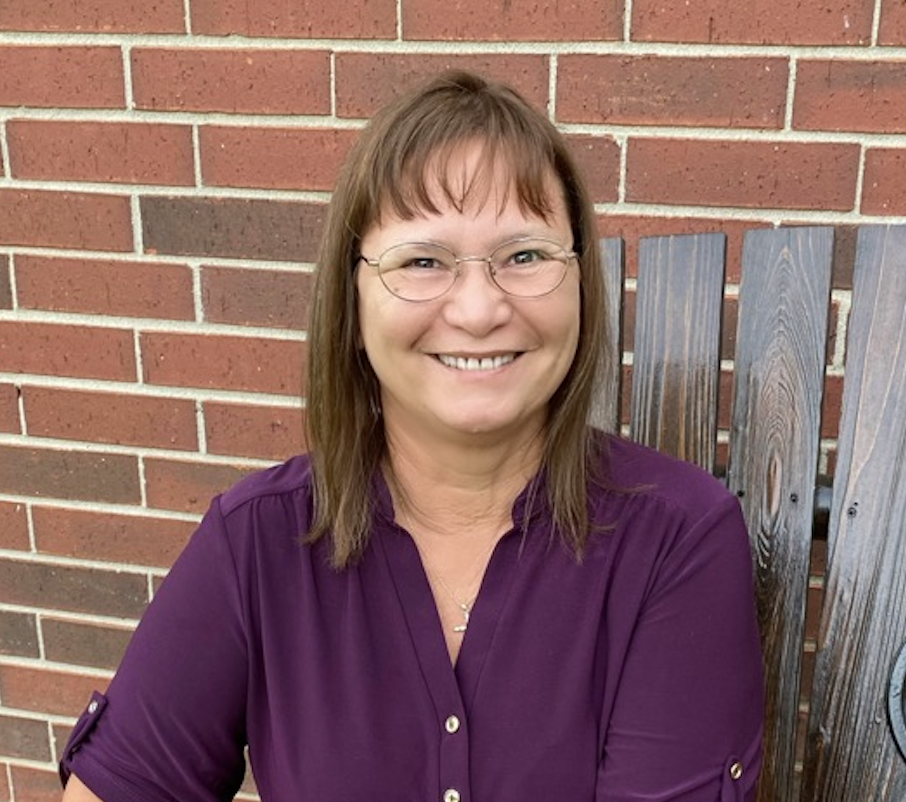
Meet Our Guest: Pamela S Thibodeaux
Pamela S Thibodeaux is an award-winning author, life coach and spiritual mentor. She has published multiple books in the categories of romantic fiction and creative non-fiction. Her tagline, “Inspirational with an Edge!” ™ defines her life, writing, and coaching style.
Connect with Pamela S Thibodeaux:

Meet Our Host: Jennifer Robin O’Keefe
Jennifer Robin is always searching for the next thing that might help: the book, the practice, the reframe you didn't know existed but turns out to be exactly what you needed.
Through conversations with experts, authors, and everyday humans, along with personal reflection, Jennifer focuses on bridging the gap between "woo" and practical, accessible self-support. Her work is rooted in the belief that wellness is not about fixing yourself, but about remembering your worth and finding what genuinely works for you.
She has spent decades exploring personal growth, energy healing, and mind-body wellness. She's trained in EFT Tapping and coaching, tools she often references in her conversations. She's not positioning herself as an expert who has it all figured out. She approaches her work with humility, curiosity, and deep respect for individual experience.
Jennifer is a lifelong learner who cherishes books and notebooks. She loves diving into research and sharing what she learns in a way that feels relatable, compassionate, and pressure-free. These conversations are an invitation: to ask your own questions, gather perspectives that resonate, and build a life that actually feels good to you.