
Build Your Mindfulness Toolkit: Returning to Wholeness with Adrianne Lind
Episode #56: Show Notes
I recently had the honor of sitting down with Adrianne Lind, a mindfulness activist, yoga teacher, and author who helps people return to steadiness through movement, breath, and awareness.
Her journey into yoga was born from necessity, pain, and ultimately, profound healing.
📖 Transcript for this episode (PDF)
Listen to the full episode:
Discovering Yoga Through Trauma
Adrianne first discovered yoga when a chiropractor recommended it for pain relief. But the source of that pain tells a much deeper story. She went out of a four-story window to escape being raped a third time in her life. This traumatic fall led her to yoga initially for physical recovery.
Decades later, when her father died, she turned to yoga again—this time to help with grief. What started as a tool for crisis management gradually became woven into the fabric of her daily life. She went from discovering it, to using it when she needed it, to incorporating it into her daily routine.
The Science Behind Mindfulness Practices
Adrianne's mindfulness practice includes breathwork, meditation, mindful movement, gratitude, and rest. And science backs all of these practices.
Breathwork has powerful physiological effects. It can lower blood pressure—Adrianne has personally used breathing exercises at the doctor's office when her first or second reading was too high. After doing breathwork for 10 minutes, her blood pressure came down. Breathing activates the vagus nerve that runs through the back of the body, triggering our rest and digest response in the parasympathetic nervous system. We either have fight or flight or rest and digest, and breath can help trigger that rest and digest state.
Meditation incorporates breathwork and brings you into the present moment. It shifts your focus away from stressing or troubling thoughts. When you focus on your breath, feel your senses, and notice the space around you, it takes your blood pressure and stress level down.
Gratitude works because when we relive anything in our minds—whether positive, scary, or happy—the brain thinks it's happening right then in the moment. It doesn't know you're having a memory, so you have that same reaction. When you practice gratitude, you trigger a happy, joyful response.
Why Rest and Digest Mode Matters
Stress is a natural part of life, but we're not designed to be in a constant, chronic stressed state. Many of us move through life with daily stressors that seem to always be there—stressful commutes, rushing to not be late, pressure to perform, financial budgets, trying to successfully fill all the roles we think we need to play. It wreaks havoc on our bodies, and chronic stress can even make us sick.
The rest and digest state is where the body shifts out of stress mode and into healing. It's when the body feels safe enough to digest food properly, balance hormones, support immune function, and regulate emotions. It's not just about relaxing—this is when real restoration happens. Without enough time in this state, we stay in chronic survival mode instead of true wellbeing.
The vagus nerve is essentially the main communication highway between the brain and body that activates rest and digest mode. When stimulated, it signals the parasympathetic nervous system to turn on—slowing heart rate, deepening breathing, and telling the body it's safe to relax and repair. Practices like deep breathing, humming, or even cold water exposure can activate the vagus nerve and help shift us out of stress mode and into restoration.
A Simple Yoga Pose for Stress Relief
Adrianne shared one pose that can help trigger the rest and digest response: Child's Pose, which she calls Wisdom Pose.
You start on your hands and knees, then spread your legs as wide as your mat or keep them close—try both to see what feels best. You can have a pillow between your stomach and the floor. If you're in a chair, you would just have your feet solidly on the floor and fold over. This triggers the vagus nerve that goes down the back of your neck, all the way down your spine.
The Power of Yoga Nidra
Adrianne's first yoga class was Yoga Nidra, which is described as yogic sleep—a deep meditation. She loved it immediately. It took her to a place where she felt like she was having an out-of-body experience, seeing herself down on the yoga mat. It had nothing to do with movement. It was about being still, the breathwork, how the teacher rotated them through their bodies naming different parts, and the scan to tune in to what you're feeling.
Yoga Nidra is scientifically proven to help people get rest—not necessarily sleep, but deep rest. Ten minutes into an hour-long Yoga Nidra session, Adrianne falls asleep, and in that time it can feel like you've had three to four hours of rest.
Yoga Nidra is even used with military veterans to help with PTS. Adrianne was taught to put the usual ending "D" for "disorder" in parentheses, because it's NOT a disorder—it's the natural way your body deals with the stress of trauma.

From Student to Teacher
Yoga helps Adrianne not only with chronic physical pain, but also with grief from loss of loved ones and post-traumatic stress from sexual violence. She incorporates mindfulness and yoga into her life daily.
But here's the thing—she's still a person with regular ups and downs. She knows how it felt grieving without a strong yoga practice, so she looks at that as the last gift her dad gave her. He made her a yoga teacher.
She was taking lots of classes with the Veterans Yoga Project online, for veterans, military families, first responders, and caregivers. Having that consistency, she realized she needed to be able to do this on her own. When she took a Yoga Nidra class and realized that's what she loved from her very first yoga class, she became a teacher. They gave her her first teaching job, and she's been teaching since 2022.
The Black Box / Gold Box Journaling Practice
Adrianne has a unique practice for managing worries alongside gratitude. She has a gold box and a black box. In the gold box, she puts down joys. In the black box, she puts down worries.
At the end of the year, she goes back and looks at what she wrote in the worry box. Usually she either forgot about it, it was taken care of, or she could scratch it off.
Doing it daily helps because it triggers something in your brain—you're reliving a happy moment, so your brain thinks you're doing whatever you're grateful for right then and there. It has residual value. You have that experience and that gratitude once, and then you can use it over and over because you can take your mind and body right back there to that good feeling.
Making Wellness Accessible to All
Part of Adrianne's mission is to make wellness accessible to all. Her nonprofit, Wellness on the Weekly, is dedicated to her mom, who was her biggest fan and cheerleader. She called it "Wellness on the Weekly" because she knew that something a week can seem doable. She guides people through 52 fun prompts for mindfulness, movement, and a whole lot less stress.
After writing the book, she had the opportunity to speak at a boarding school and address a class of high school girls as part of an eight-week program. They wanted her to talk about wellness, boundaries, and things she wished she learned in high school, like meditation, journaling, and processing emotions. She gifted them the book as part of it.
She came up with a goal: 1 million reads. And 1 million reads doesn't mean 1 million sales—it could be loaned in the library. She made sure the girls had hardback copies because that's something you can treasure.
In that mentor role, she gives the book whenever she does presentations to teenagers and also with women's organizations because the main goal is to help people. She doesn't think people will necessarily like everything they try in it, but hopefully they'll find something they'll do over and over and build their own routine or toolkit.
Everything from mindful eating (she knows she eats too fast and is still working on that) to gratitude journaling, breathing, movement, tapping, and mindful walks. She tries to do all the things and knows that every day isn't gonna look the same, but when it's consistent, that's the key to incrementally feeling better—whether it's managing grief, managing chronic pain, or other stressors.
Start with Reflection
The book says 52 prompts, and you can start anywhere—you don't have to start in January. But it starts with reflection. Adrianne starts with journaling first, to sit down and envision the year you want to have. Not the goals, but how you want to feel at the end of each month.
That was an epiphany she had for herself. It's not about achieving certain things, it's about how she's going to feel. That has been a game changer for her.
It feels more internal. A lot of people wait until the end of the year or beginning of the new year to set all these goals for what they want to do, be, have, or get. And it's very external. What Adrianne talks about is more internal—how do I want to feel, how do I want to show up in the world, how do I want to be. And it has less pressure too.
Not Broken— Remembering Wholeness
Adrianne shares a philosophy that we need to remember our wholeness and not "fix what is broken." This ties back to the idea of putting the "D" in PTS in parentheses—instead of owning it as a disorder.
For her personally, it was about knowing after the first rape that she wasn't broken. You can carry so much around with that—like it's your fault, why did it happen, how did it happen. Then it happened the second time. She wasn't going to let it happen the third time. But figuring out that she's not broken and this isn't her fault was crucial.
It doesn't have to be that dramatic. It could be the same thing with divorce, with a job loss, any disappointment, anything we can see as a slight. You start to think that something's wrong with you, that that's either why that happened to you or did not happen for you.
Strategies for Focusing on Wholeness
Remembering wholeness is a work in progress. It's not something you do once and that's it—it's ongoing.
For Adrianne, it starts with talking to herself with kindness or self-compassion. It's easy to slip into negative self-talk. When she's aware of her body, she has rheumatoid arthritis and joint damage in her thumbs. If she focuses on what her thumbs can't do or how they look differently, that's negative self-talk right there. Instead, she's grateful her thumbs still work. She has five fingers. It comes back to gratitude.
By walking in gratitude and being grateful for herself and her experience, knowing that she's a spiritual being having a human experience—and so are all the other humans around her—she can start with boundaries and not take everything personally. She's constantly working on responding instead of reacting, constantly working on trying to be kind with all her words to herself and others, constantly trying to work on saying and thinking positive thoughts.
She's a positive, optimistic person in general. She encourages being that person in the grocery store line who, instead of being on your device, does some breathwork. Maybe people would mirror that. You could maybe take down the tension of your whole section of the line with your calming energy.
The Entrainment Effect
People who are near each other will calibrate. If your breathing is more regulated, the people around you will all of a sudden kind of relax because their heart rate is slowing down and calming, and they don't even know why. It's very subtle but it does happen.
It's called entrainment. There was a study where they used metronomes—little musical devices that keep the beat. If you put a whole bunch of them in a room and get them all going differently, eventually they will all be going the same. It's wild. It's science, but it's wild.
What Oneness Means
The concept of oneness is a key principle of this show. For Adrianne, oneness means body and mind. If she can have those in tune or like one, that's what she's working toward every day with her mindfulness practice. She wants to be so in tune that she's not missing all those subtle messages that our body gives us.
If she's making the wrong decision, she feels it—they call it a gut reaction for a reason. You feel it, like when you meet someone and either get the butterflies or when your stomach sinks. If she can have that body-mind connection, 9 times out of 10 things are going to probably be okay.
The Most Important Takeaway
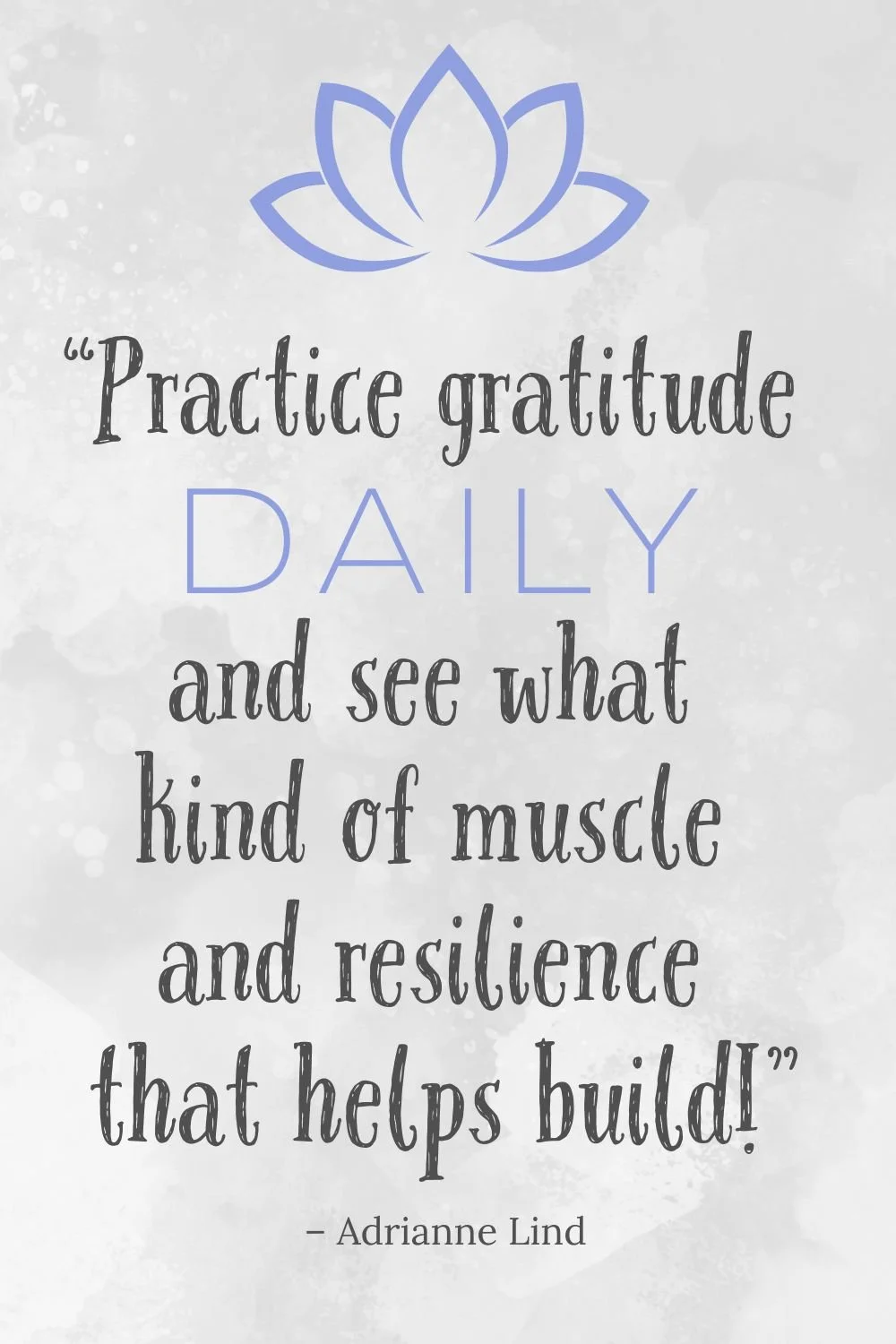
Practice gratitude in whatever form daily and see what kind of muscle and resilience that helps build.
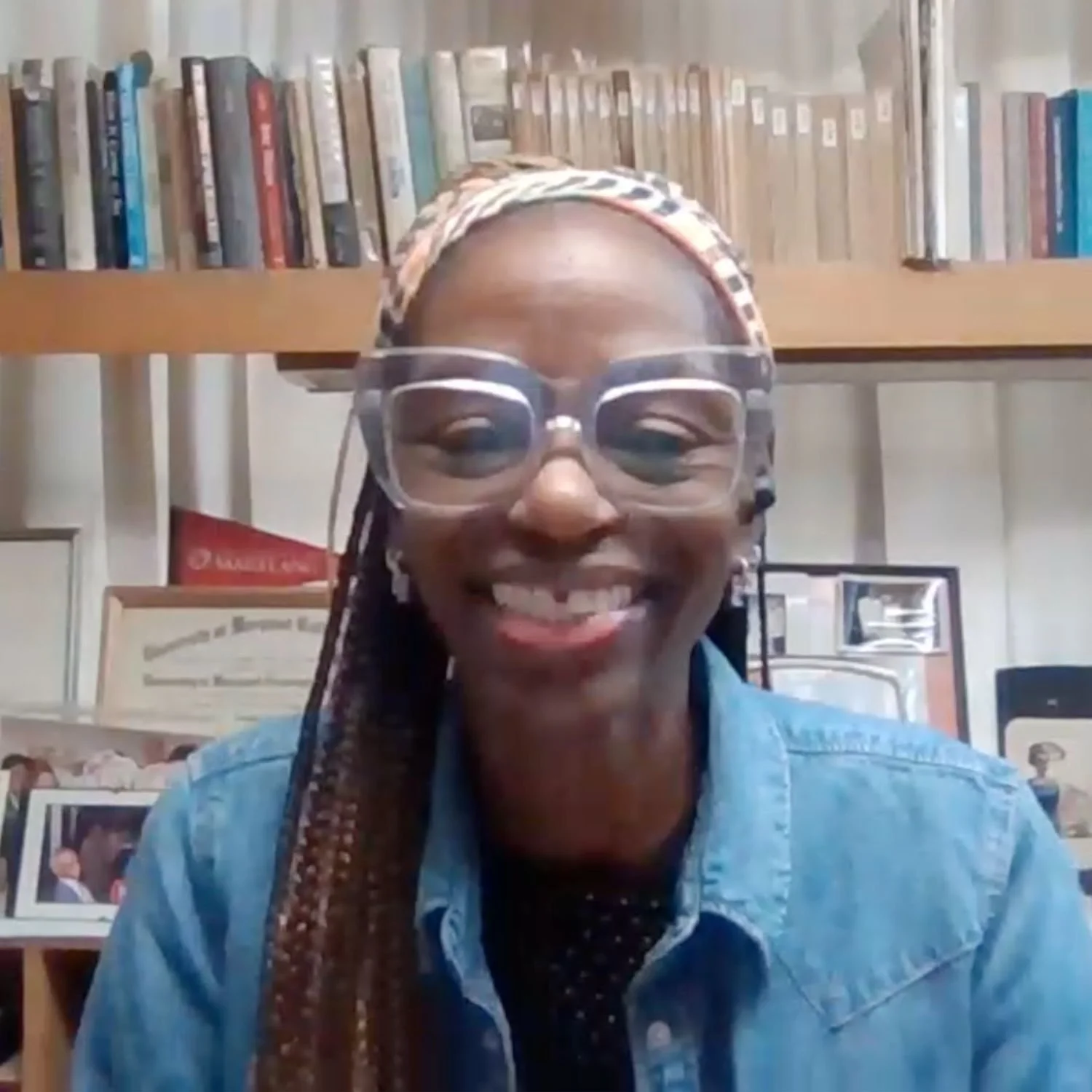
Meet Our Guest: Adrianne Lind
Adrianne is a mindfulness activist, author, and Yoga guide dedicated to helping people steady their nervous system and build everyday resilience. Through her Rooted for Care method, she blends breath awareness, gentle movement, and practical self-regulation tools to support anyone navigating stress, uncertainty, or emotional overload. Her work appears across books, courses, and global workshops, including sessions for veterans, activists, remote teams, and women seeking grounded support in their daily lives. She creates practices that feel accessible, evidence-informed, and deeply human. Her books Wellness on the Weekly, Mindful and Mobilized, and Rooted Calm offer simple prompts and tools for people who want to feel more present, focused, and capable in a complex world. Adrianne’s mission is to show that steadiness is possible for everyone, and that you can always return to the calm within you, no matter what life brings.
Connect with Adrianne:

Meet Our Host:
Jennifer Robin is always searching for the next thing that might help: the book, the practice, the reframe you didn't know existed but turns out to be exactly what you needed.
Through conversations with experts, authors, and everyday humans, along with personal reflection, Jennifer focuses on bridging the gap between "woo" and practical, accessible self-support. Her work is rooted in the belief that wellness is not about fixing yourself, but about remembering your worth and finding what genuinely works for you.
She has spent decades exploring personal growth, energy healing, and mind-body wellness. She's trained in EFT Tapping and coaching, tools she often references in her conversations. She's not positioning herself as an expert who has it all figured out. She approaches her work with humility, curiosity, and deep respect for individual experience.
Jennifer is a lifelong learner who cherishes books and notebooks. She loves diving into research and sharing what she learns in a way that feels relatable, compassionate, and pressure-free. These conversations are an invitation: to ask your own questions, gather perspectives that resonate, and build a life that actually feels good to you.