
Beyond Religious Boxes- The Tree of Life & Sacred Spaces with Sarah Woodard
Episode #47: Show Notes
Sarah Woodard joined me for a fascinating conversation about spirituality, nature, and the universal patterns that connect all religious traditions. Sarah's work is inspired by nature and rooted in Kabbalah and the Tree of Life, but what makes her approach truly unique is how she's mapped more than 40 spiritual and religious traditions to this ancient framework.
If you've ever felt like traditional organized religion didn't quite fit, or if you've suspected that all religions might be pointing to the same truth, this conversation is for you.
📖 Transcript for this episode (PDF)
Listen to the full episode:
Watch this episode’s video:
How the Tree of Life Unifies Spiritual Traditions
Sarah started her work wanting to help seekers who are exploring spiritual growth beyond the traditional frameworks of organized religion. As she dug deeper into Kabbalah and specifically the Tree of Life, she discovered something remarkable: it's a unifier.
She's successfully mapped more than 40 spiritual and religious traditions to the tree. It shows up in all of them in different ways. We're talking about everything from the religions we all know like Christianity, Islam, and Judaism, to Aboriginal Dreamtime, to Taoism, to indigenous cultures and their beliefs.
Sarah described the moment of discovery as being like that scene in Indiana Jones and the Crystal Skull when you put on the crystal skull and suddenly everything becomes clear. That's what happened for her when she realized these universal patterns.
Her framework is simple but profound: Nature is our first teacher and will always be our first teacher. Nature is how the divine manifests in reality, and so are we. The Tree of Life, with this new understanding, became the map and the guide for the growth process.
Growing Up Between Two Religious Worlds
I have to admit, even as a teenager I remember thinking that all these religions were basically talking about the same thing. But the people we're supposed to respect (parents, religious leaders, teachers) would say, "No, no, no. We're Christian. This is what we are, this is what we believe, everything else is wrong." And I always thought, that doesn't make sense. What if I grew up in Africa? Would I still be learning this?
Sarah had a similar experience, but hers was even more direct. She grew up in a household where both parents were raised Jewish and had a Jewish wedding where they promised to have a Jewish family. But then her mom converted to Christianity, and it became what Sarah calls "a battle for souls." One parent insisted the kids go to Hebrew school, the other wanted them to come to church.
Sarah sat there the whole time thinking, "Why are we fighting about this? You're using different language to talk about the same thing."
What's beautiful is that even as a child, Sarah's first sanctuary wasn't a synagogue or a church. It was a bush that grew in a circle in her front yard. She would crawl inside and, though she couldn't have articulated it at the time, she was literally communing with Earth.
I can so relate to that. I remember those giant sculpted shrubs people used to have in front of their houses. We had a house at one time with those, and I would crawl under them. It was like a little sanctuary.
The Dark Night of the Soul That Led to Clarity
Sarah's spiritual journey wasn't straightforward. In fourth grade, when her family switched synagogues, she was confronted with the same bullying she received in public school as the only Jewish kid in her class, except this time it was from other Jewish kids. That started a big disconnect for her. She thought, "Oh, Judaism isn't what I thought it was. These aren't actually my people."
She spent years, actually decades of her life, asking, "Where is my spiritual home?" She explored everything from Reiki and shamanic work to some of the really out there New Age stuff. And underneath all of it, she kept thinking, "You're all saying the same thing and you're not saying it right. This isn't the answer."
Sarah moved back and forth across the country about 15 times before she figured out where she finally wanted to live. During one of these moves, she was getting really dejected, thinking, "Why don't I have this answer?" She needed to come up with a new approach to working with the divine, and that forced her back into Kabbalah, back to the Tree of Life.
That's when everything clicked. She had her "aha" moment and realized she could use this framework not just to understand spirituality, but to actually figure out where she was going and bring that into reality. She doesn't use the word "manifesting" because she thinks that's too out there, like "if I just ask hard enough, the universe will drop it in my lap." That's not how it works, according to Sarah.
Now she's in Illinois, in the western suburbs of Chicago, and she says this is where her soul home is. She's never felt more comfortable anywhere in her life. She can prove that the Tree of Life framework works with this very big life decision.
Seeing the Divine in Nature
One of the core teachings Sarah shares is that the divine isn't "out there somewhere" like a lot of religious boxes teach us. You know the story: God is this being in the sky who's unknowable and untouchable and sees everything. That is one aspect, Sarah says, but that aspect shows up in reality, in nature, and in us.
It's not really just "the Divine is this unknowable being waiting for us to be worthy." We're already worthy and the Divine is already here.
Nature's Spiritual Lessons Are Everywhere
Sarah gave some beautiful examples of how nature teaches us:
Watching the trees lose their leaves in the fall is a lesson in letting go.
Spring, when those first crocuses come up through the ground (even sometimes when there's still snow) shows us resilience and renewal.
Even the ants at your picnic are showing you the divine. Maybe it's not the ideal way we'd like to interact, but the divine is still there.
The stars at night, the way light filters through the forest canopy, all of these are constantly communicating lessons and wisdom.
What it really comes down to is being present. Most people move through the day on autopilot. We need to slow down and be present and pay attention, with curiosity rather than expectation.
Sarah calls this "contemplative seeing." It's really about being WITH nature, a PART of nature, which is how we were meant to live. Not "I'm going into the forest to get a better connection," but rather "I am in harmony with the forest because that is where I connect." There's a difference.
Bringing Nature Into Your Daily Life
When we talked about forest bathing and touching trees while hiking, Sarah made an important point: you don't have to go to the forest to be with nature. You can literally be with nature all the time.
If you've got house plants, touch those. If you don't have any, get some. Sarah doesn't care if you're the person who thinks you kill everything. There is something out there you can have in your house that will grow and be green and bring nature to your life. Find a plant store that will help you find something for your particular color of thumb.
For beginners (and I include myself in this category), pothos are really, really easy to keep alive, especially if you put them in water. Then you just have to make sure the jar has water in it. You could check it once a week and be okay.
Sarah has the best luck with spider plants. They also clean your air, so it's win-win. The great thing about spider plants is they can live in water, they can live in dirt, they can live in the air. You can literally just put them somewhere that there's a little sun and they're like, "I'm good."
We Come Into This World as Divine Beings
I had to ask Sarah about something a previous guest said that really resonated with me. He talked about how some of us brought up in formal religions, mostly Christian religions, were taught that we come into this world born a sinner. But he said after studying many religions and ancient history, he believed we came in as divine beings.
Sarah completely agreed. First of all, Judaism doesn't even buy into this whole "born a sinner" thing. To her, that was a turnoff right from the start. We were definitely not born sinners. We were all born divine.
It's a very different thing when you look at spirituality through the eyes of wanting wisdom rather than wanting control.

How Plants and Trees Map to Spiritual Growth
I asked Sarah how different trees and plants map to spiritual growth stages, and her answer surprised me. It's actually not about a specific tree or a specific plant. The Tree of Life itself is the framework.
The way Sarah teaches this is really different from every other Kabbalistic person out there. You're not gonna find anyone else mapping it to 40 other traditions. You're not gonna find anybody else using it as a map the way she does. And she's okay with that. This is what she was born to do.
Understanding the Tree of Life Framework
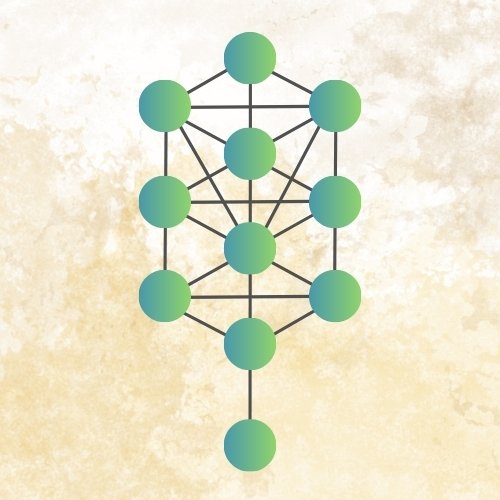
For anyone who might be familiar with the Tree of Life, there are often two different models with two different depictions. One has 10 circles (or Sefirot), one has 11. Sarah uses the one with 11. What's being left out in the one with 10 is called Da'at. She believes that's essential because that's where your soul purpose lives. That's where knowledge and understanding merge into wisdom. Why would you not want that?
Because the tree is the framework, the map, the tool, and each circle represents a different aspect of spiritual growth, different plants and trees may speak to somebody at a different point depending on their personal wiring and where they're at on their journey.
Working With Plants for Spiritual Growth
Let's say you've done a little bit of work assessing where you're at on the tree of life and you realize, "Wow, I'm really stuck in the middle, Tiferet, which is the heart. I need to open up my heart more because I'm struggling with being too rigid and I have too severe boundaries. I need to bring in a little more compassion and tolerance."
What do you need to do that? There are any number of ways. You could work with crystals, EFT, meditation, therapy, a thousand things. You could also work with plants.
Now, there are gonna be specific plants that volunteer for those types of jobs when they come down as souls into our realm. But that doesn't mean it's how it's meant to work with YOUR wiring.
Sarah's advice: Don't just go, "Okay, well, this plant is supposed to help with love and compassion. I'm going to use it." It might work. Maybe there's something better for your personal wiring.
The better way to do it is to ask, "Which plant is going to work with me on this?" Then wait and get quiet and see where you're led. It might not be what the internet gods tell you.
Different Ways to Work With Plants
So how would someone actually use a plant for spiritual growth? It's going to vary based on the person, their journey, and their preferences. Sarah gave some examples:
If it's an edible plant or herb, maybe you need to incorporate it into your food
Maybe it's one you just need in your space, like how people use a money tree in feng shui
Maybe you just need a picture of it on your desktop to remind you, because that's where you spend all your time
Maybe you have a garden and it's something you need to plant there
It could be a thousand and one different ways. There is no right way. There's also no wrong way. As long as you're not hurting anyone, that's the only wrong way.
Your Soul Season vs. Calendar Season
The key to aligning your life to nature is to first recognize what season your soul is in. Just because the calendar says it's fall doesn't mean you're in the autumn of your life. And it has nothing to do with age or anything like that. Autumn is just about letting go. You're in a period of your life where you need to let go of something.
But just because the calendar says it's autumn doesn't mean that's your soul season. So the first part is figuring out where your soul is at. Maybe you're actually in a winter (a rest phase), or you're in a harvest phase. It could be anywhere.
If you are in a winter, you need to rest, it's time for you to go dormant and do some deep thinking, some deep meditating, some deep inner work in some fashion. Don't push yourself to grow and make all big life changes. Just honor that and be still.
Sarah admitted that for many people, winter is the most frustrating period of life. But when we take the time to honor that deep rest, what comes out will be much more effective and much more aligned than if you just push through and ignore the needed rest.
Don't push through. Honor your natural cycles.
Honoring Your Daily Energy Cycle
Then there's the daily cycle. Sarah is a morning person, but I’m definitely NOT.
We live in a society that defines nine to five as when you have to be productive. Why? Honor your own cycle. Whatever your hours are, they're not wrong. They're just different, and that's okay.
Sarah's biggest frustration with being a morning person is that society doesn't operate that way. She gets frustrated when she’s awake and ready to tackle errands for the day but the grocery store isn’t open yet. So she finds other things she can channel her energy into.
It's about honoring the day cycles and the seasonal cycles that are yours. It has nothing to do with what society is doing or what the calendar is doing. It's about your OWN cycles.
Creating a Sacred Sanctuary in Nature
When I asked Sarah about turning a natural setting into a sacred sanctuary, she said it's actually so much simpler than people think.
You don't need any elaborate rituals or tools. Some people will tell you that you have to bless it and clear it and all that. You can, if it speaks to you, but you don't have to.
What makes it a sacred space is your presence and your intention.
How to Find Your Sacred Space
Simply walk somewhere. Maybe it's just a forest or maybe there's a tree in your backyard. It doesn't matter. As you're walking, just pay attention. Find a space that calls to you. It might be a tree. It might be a rock near the water. It might be an open field. It could be literally anything. It might be one flower sticking up out of the ground. It doesn't matter.
Once you've found that, just keep going back there. You don't have to do anything other than leave your phone in your pocket. Just go there. Just be present. Bring your questions, your grief, your joy, whatever it is you're holding.
Because you're there doing that, showing up honestly and authentically, that place becomes a sacred space automatically.
Sarah's Tree Story
Sarah loves to explore The Morton Arboretum, which is 1,700 acres of beauty. One summer day, she found this one tree and thought, "Oh yeah, you're my tree." She just knew.
A couple weeks before our conversation, she was in one of those emotional spaces where she felt like she needed something. She went to the arboretum not intending to see this tree. She actually went intending to take some nature photography pictures of the water and the fall colors reflecting.
But then as she was walking, she realized, "Oh my God, I know where I am." The next thing she knew, she was at her tree. It was like it called to her, even though she wasn't planning it. She sat there and just kind of let it all out.
The tree helped her pick it apart and go, "Okay, what's really going on? Why do I feel like everything is hard right now? Okay, I'm grieving this and this and this and this, and it all kind of happened all together. No wonder I feel like this is hard right now."
She could work with that. She could do the work she needed to do to process the grief, to heal, to move forward. She walked away knowing, "I know what I'm feeling now. This is grief. These are the things that I am grieving. I know what to do with this now."
Longing and Resonance: Your Soul's Voice
Your soul is speaking to you through longing and resonance. It's that feeling of "YES." And it can also be a feeling of extreme jealousy. Like, "Oh my God, that person has whatever."
It can be a material thing. And that is okay. We are allowed to want material things. We live in a material world. Or it might not be material.
Those feelings, that's your soul pulling you in a direction. When your soul is like, "Oh, yes, I love this," that's it speaking. That's how Sarah felt when she saw her tree. It was like, "Oh yes, this is my tree."
At the same time, when she sees people who have certain styles of homes or whatever and thinks, "Oh, I want that," instead of trying to just be like, "Well, jealousy is bad," and shoving that down, she recognizes that's her soul saying that something about her soul recognizes that feels more true than what she has now.
Does it mean you can change immediately? Nope. You're gonna have to put in some work. Maybe any type of work to get there. You're still allowed to want it.
Those strong connection feelings, it's that resonance, that longing. That's your soul.
Separating Soul Voice From Ego Voice
The tricky part, of course, is separating that from your ego's agenda. The ego wants things that are certain that you can control.
When I asked if that meant things that are safe, as far as keeping us in the comfort zone, Sarah clarified that your soul may also want comfort zone, but in a different way. Your soul can be okay with messy. However, not always. Some people come in with traumatized souls.
The way Sarah distinguishes it is by asking herself: Is this something I think I should do? Or that this would make me appear a certain way? Is this something that I feel like I would be judged positively for, and that's the only reason I'm doing it?
Those questions, that's your ego. You gotta just say, "Hey, I hear you. Can you step aside though? 'Cause I wanna get soul's input on this."
Ask your ego to just take a backseat. You don't have to shut it up permanently. You're never gonna be able to ignore it totally. Just ask it to step aside or take a backseat so you can listen to your other voice, your soul voice, your heart voice.
Let it come through because it's softer. It's a whisper rather than a yell. Your ego voice is like, "I am here. And you will listen." Your soul voice is like, "Hi, I'd like to speak now."
Why Nature Helps You Hear Your Soul
The reason Sarah loves nature for this is because when you leave your phone in your pocket, it strips away the noise. When you're sitting with a tree or a plant or by a river or whatever speaks to you, your ego automatically quiets down because it recognizes it's not needed in that moment. And that's when your soul can actually just very easily say, "Hello. Here's what I've been trying to tell you."
You Don't Have to Quiet Your Mind
I know a lot of people, me included, have trouble when they try to meditate and quiet the mind. My mind just won't shut up. But I can go for a two-hour hike, and usually after an hour passes, I'm finally in that quiet space. I'm trying to pay attention to what's around me. I'm more in the zone.
Sarah wants to correct a common misperception about meditation. She explained that we are still wired the same way as when we lived in caves, when having an active mind literally kept us alive. She says that asking your brain to be empty and silent is not even rational.
Everything Can Be Meditation
Literally anything can become meditation. Meditation is about presence and awareness and intention. Doing your dishes can become meditative if you're focusing just on doing the dishes. How does the water feel? How does the soap feel? How does the sponge feel? Putting the dishes away, if you have a dishwasher, can be meditation.
Walking, running, all of these can be meditative. And even if you're not somewhere beautiful where you want to pay attention to the nature, you can tune into: How do your lungs sound and feel? How does your breath sound coming out of your mouth and your nose? What's your heart doing? That turns an ordinary activity into a meditation.
You don't have to sit in a corner on a cushion with your legs crossed and your hands in a certain position chanting in a special way. Sarah shares that we are not wired to do that.
People beat up on themselves and feel like they're failing at spirituality. You're not failing. You need a practice that works for you. You need something that works for the way you are wired, not somebody else's path.
That's basically where I'm at. I still attempt traditional meditation sometimes, but I'm figuring out what my way is. Walking in nature is one of my ways, and music and movement work for me personally.
Music and Movement as Meditation
Sarah confirmed that music and movement definitely work for many people. A lot of indigenous cultures start the day by singing a greeting to the morning, to the gods, to whomever.
She adopted something similar in her life: singing to the day to greet the day. And she's a terrible singer. She's not gonna do it in front of anyone. But it doesn't matter. It's not for anyone else. It's for her and for spirit.
Does it help you get back to your center? Does it help you be more present instead of worrying about the future or caught up in guilt about something from the past? Does it bring you to your center? Does it bring you present? It counts.
Seeking Answers vs. Remembering Who You Are
I asked Sarah about the difference between just seeking answers versus us remembering who we actually are, and this is where a lot of people get stuck, she said.
Seeking answers assumes that you're missing something, that the truth is somewhere outside of you to be found. And if you can just find the right teacher, or the right book, or the right religious box, then you'll know.
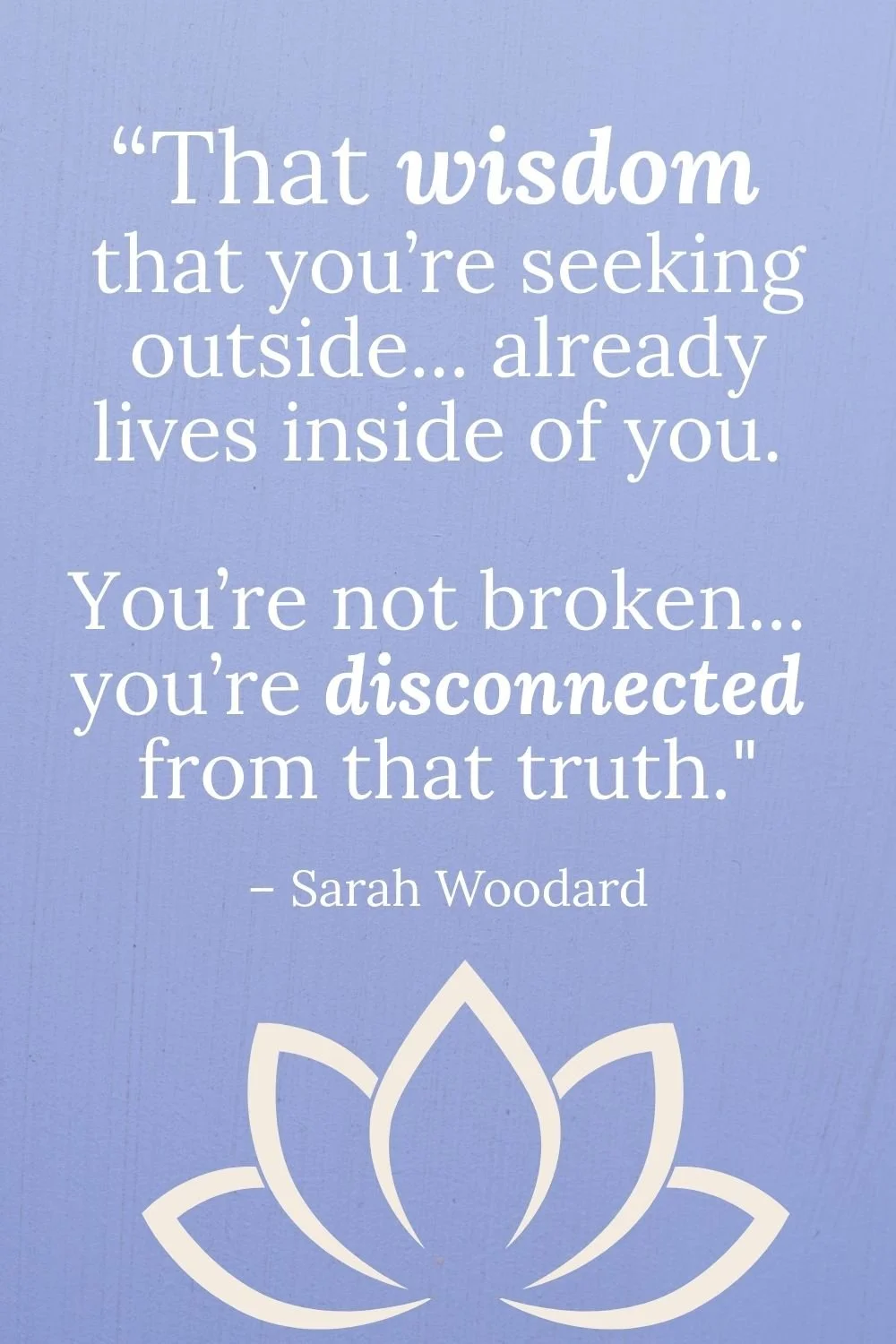
But remembering is about recognizing that the wisdom you are seeking outside right now already lives inside of you. You're not broken, you're not missing pieces. You're disconnected from that truth.
The Tree of Life Shows You What You Already Know
The tree isn't teaching you something new. It's just showing you patterns that your soul already recognizes. When you start to work with it, you get this sense of, "Oh yeah, I just didn't know how to say that. I knew that though. Well, I didn't have the words for that, but yes, that's true too."
It becomes a process of just reacquainting yourself with the knowledge you were born with and that society has taught us to forget. Society taught us to get into a religious box and find the truth outside of ourselves— but that’s not where it is.
A Different Approach
Unlike other Kabbalists you may have heard of or worked with, Sarah views the Tree of Life as a process that can be used to show you where you are. It's not about what they would call "path working," which is like "start here, do this specific meditation to move to this next spot."
She doesn't use it like that. She uses it as a process, a map. And the tools that you use are as vast as there are people on this planet. Meditation can be one.
She also wants to emphasize that you don't need to be "spiritual enough" or have it all figured out. The whole point is that you're seeking. You want that direct relationship with the divine on your terms.
No two people are the same. So why would you walk in someone else's spiritual path?
Sarah’s approach to spirituality feels refreshing and accessible. The idea that all these religious traditions are pointing to the same truth, that the divine is already here in nature and in us, that we're not broken or missing pieces but simply disconnected from our inner wisdom... all of this resonates deeply with me.
And the practical advice, like finding your own form of meditation, honoring your natural cycles instead of fighting them, and creating sacred spaces simply through presence and intention, these are things we can all start doing today.
If you've been searching for a spiritual path that honors your unique wiring and doesn't force you into someone else's box, consider connecting with Sarah.
Meet Our Guest: Sarah Woodard
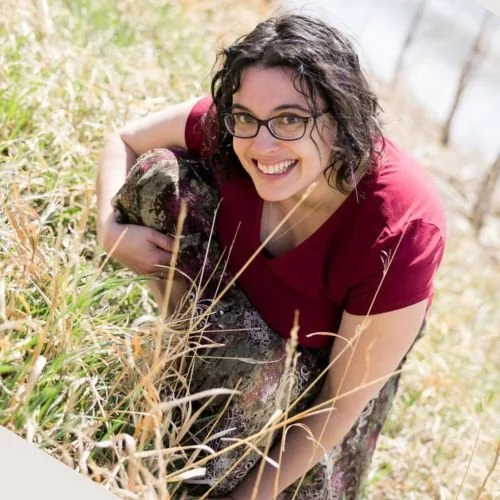
Sarah Woodard founded Wisdom Grove. She helps seekers exploring spirituality beyond traditional frameworks and looking to create a personal connection with the Divine find their path using the Tree of Life and Nature’s Wisdom. She successfully mapped more than 40 spiritual and religious traditions to the Tree and unlike traditional Tree of Life teachers, she views it as a process that can be used to show you where you are and how to get where you’re going as well as which tools you need at this moment based on your personal wiring and learning styles.
Connect with Sarah:

Meet Our Host: Jennifer Robin O’Keefe
Jennifer Robin is always searching for the next thing that might help: the book, the practice, the reframe you didn't know existed but turns out to be exactly what you needed.
Through conversations with experts, authors, and everyday humans, along with personal reflection, Jennifer focuses on bridging the gap between "woo" and practical, accessible self-support. Her work is rooted in the belief that wellness is not about fixing yourself, but about remembering your worth and finding what genuinely works for you.
She has spent decades exploring personal growth, energy healing, and mind-body wellness. She's trained in EFT Tapping and coaching, tools she often references in her conversations. She's not positioning herself as an expert who has it all figured out. She approaches her work with humility, curiosity, and deep respect for individual experience.
Jennifer is a lifelong learner who cherishes books and notebooks. She loves diving into research and sharing what she learns in a way that feels relatable, compassionate, and pressure-free. These conversations are an invitation: to ask your own questions, gather perspectives that resonate, and build a life that actually feels good to you.